Sunday, July 6, 2014

Toyota GT86 TRD, 2014

 Toyota GT86 TRD, 2014, Luxury Automobiless
  Toyota GT86 TRD, 2014, Luxury Automobiless Toyota GT86 TRD, 2014, Luxury Automobiless
  Toyota GT86 TRD, 2014, Luxury Automobiless Toyota GT86 TRD, 2014, Luxury Automobiless
 Toyota GT86 TRD, 2014

The Toyota GT86 has revitalised Toyota's reputation for building cars that are all about the pure pleasure of driving since its launch in 2012, . Now the hugely acclaimed sports coupe - shortlisted for both European and World Car of the Year awards - gains even more appeal with the introduction of the new Toyota GT86 TRD.

The equipped with genuine design and performance features from TRD (Toyota Racing Development), one of the world's most accomplished and successful after market engineering businesses.

GT86 is the first UK Toyota for which official TRD parts have been used to create a specific production model grade.

The Toyota GT86 TRD , on sale from 1 March, 2013, create a new halo model for the 2+2 coupe range. Both six-speed manual and automatic versions will be available, in a choice of two colours: Pearl White and GT86 Black. On-the-road prices are £31,495 for the manual and £32,995 for the auto.

The focus is on sports styling, but not at the cost of GT86's essential performance and handling character. The package includes 18-inch cast TF6 alloys, deep front and side skirts, a rear bumper spoiler and a fast-response quad-exhaust system with a rear diffuser to increase stability. The TRD touches also extended to a branded radiator cap and fuel filler cover, while inside the car there is a new TRD gear shift lever.

These items are all in addition to GT86's established equipment specification, which includes HID headlamps, front fog lamps, limited slip differential, Smart Entry and Start, dual-zone climate control, analogue dials and meters, drilled aluminium pedals, sports seats, scuff plates, cruise control and the Toyota Touch multimedia system.

Acceleration and maximum speed are unchanged at 7.7 seconds for 0-62mph and 140mph for the manual and 8.4 seconds and 130mph for the automatic. There are slight changes in fuel consumption and emissions: 192g/km and 34.9mpg for the manual and 181g/km and 36.2mpg for the automatic (all figures official combined cycle).


Read More

Saturday, July 5, 2014

Subaru WRX, 2015

Subaru WRX, 2015, Luxury AutomobilessSubaru WRX, 2015, Luxury Automobiless
 Subaru WRX, 2015, Luxury AutomobilessSubaru WRX, 2015, Luxury Automobiless
 Subaru WRX, 2015, Luxury AutomobilessSubaru WRX, 2015, Luxury Automobiless
 Subaru WRX, 2015

The all-new Subaru WRX (US specifications) has made its world premiere at the 2013 Los Angeles Auto Show being held at the Los Angeles Convention Center.

The product concept for the all-new Subaru WRX is "Pure Power in Your Control". Reigning in the intense power and superior environmental friendliness of the 2.0-liter Horizontally-Opposed direct injection turbo "DIT" engine with a body and chassis thoroughly stiffened, the new WRX has drivers rejoicing at the free reign they have over this high-powered machine. Also,along with the standard six-speed manual transmission, Sport Lineartronic has newly been adopted to the transmission. In addition to smooth shifting mode, the Sport Lineartronic comes with an eight-speed manual shift mode with sharp shifting response, allowing more drivers to enjoy a spirited drive.

Equipped with a Symmetrical AWD (All-Wheel drive) system built around Subaru's Boxer engine, the WRX is the symbol of Subaru AWD sport performance. Ever since the first model hit the streets back in 1992, the WRX has gained worldwide support from sports car enthusiasts as a distinctive sports sedan combining impressive sport performance with the practicality of a four-door sedan.

Pure Power in Your Control
The product concept "Pure Power in Your Control" was established during development of the new Subaru WRX. This concept aims to reach an even higher order of "absolute speed" and "driving excitement" for sports sedans, the goal pursued in successive generations of WRX models.This product concept was embodied to maximize the potential of the turbo Boxer engine and the pursuit of ultimate control performance, allowing drivers to steer the vehicle exactly as they imagine. To this end, the body has been made lighter and more rigid, integrating extensive chassis reinforcements.

Chassis and Body
Chassis and body performance have been thoroughly enhanced so that drivers can better control the absolute speed of combining Symmetrical AWD with a turbo Boxer engine.

Working to stiffen both body and suspension while optimizing suspension geometry has both quickened vehicle response to driver steering input and raised the limit performance for cornering. In addition, Multi-mode Vehicle Dynamics Control (VDC) and Active Torque Vectoring have been added for even more predictable, more enjoyable driving.

Many hours of in-depth suspension tuning have resulted in a flat, comfortable ride.

The electric power steering is employed with more rigid steering gearbox mounts for a improved fuel efficiency and a more direct steering feel.

The Engine
The Subaru WRX is equipped with a new high performance 2.0-liter Horizontally-Opposed direct injection turbo "DIT" engine for high power with environmental friendliness.

The DIT engine has vastly improved performance over the existing 2.5-liter model. It produces a maximum 268 horsepower at 5,600 rpm and 258 lb.-ft. of torque from 2,000 to 5,200 rpm while maintaining high environmental performance.

The Transmission
This is the first time a manual transmission has been paired with the DIT Boxer engine.Also, the new optional Sport Lineartronic provides greatly improved shift response for a sportier ride than the existing Lineartronic applied for higher torque. This offers more drivers excellent environmental friendliness to go along with real sports driving excitement.

6-Speed Manual Transmission
The gear ratio and gear stick ratio have been optimized from the five-speed manual transmission to achieve better driveability and smoother shifting to match the sporty features of the WRX.

By widening the gear ratios from the existing five-speed manual transmission to keep engine speeds lower, it has better fuel economy and is quieter driving at high speeds.

Sport Lineartronic
The Sport Lineartronic draws out the full potential of the 2.0-liter DIT Boxer engine in terms of power, torque and environmental friendliness, allowing for relaxed, environmentally responsible driving.

Safety
Following Subaru's safety philosophy of "ALL-AROUND SAFETY", performance in all safety fields have been enhanced.

Active Safety
With Symmetrical AWD as a base, the body was lightened, rigidity improved and chassis performance enhanced along with VDC. All this gives the Subaru WRX the best hazard avoidance performance in its class, making driving excitement a safe endeavor in any scenario.

Passive Safety
The new WRX employs more high tensile steel plating with strengthened joints with various structures. While helping to reduce weight, these changes also make for a stronger body with world-class safety performance in collisions from the front, rear or sides.

In addition to assertively using collision-absorbing structure for the hood and bulkhead,collision-absorbing material has been added in the engine compartment side for increased pedestrian protection.
Read More

Friday, July 4, 2014

Seat Mii Ecofuel, 2014

Seat Mii Ecofuel, 2014, Luxury AutomobilessSeat Mii Ecofuel, 2014, Luxury Automobiless
 Seat Mii Ecofuel, 2014, Luxury AutomobilessSeat Mii Ecofuel, 2014, Luxury Automobiless
 Seat Mii Ecofuel, 2014, Luxury AutomobilessSeat Mii Ecofuel, 2014, Luxury Automobiless
 Seat Mii Ecofuel, 2014

The SEAT is expanding the Mii family with the introduction of the new SEAT Mii Eco fuel - the company's lowest-emitting production car ever. The Mii Eco fuel runs on compressed natural gas (CNG), bringing outstanding efficiency and significantly reduced running costs without sacrificing the fun driving dynamics that the Mii is synonymous with.

The first model with a CNG engine to wear a SEAT badge, and making its debut at the 2013 Geneva Motor Show, the Mii Eco fuel boasts average consumption of just 2.9 kg CNG/100 km. And because the fuel price over this distance is less than 3 Euros (approximately £2.60) in many countries, the running costs are approximately half those of a Mii with a petrol engine.

The 1.0-litre, 68 PS engine is based on the three-cylinder petrol unit found in the Mii (with 60 PS and 75 PS outputs), but it's been specifically developed for CNG operation. Its CO2 figure of just 79 g/km is best-in-class.
 
The innovative CNG engine
As in the petrol-driven Mii models, the Eco fuel version features a three-cylinder spark-ignition engine with a displacement of 999 cc. In the CNG variant, the compact power unit generates 68 PS at 6,200 rpm. The exceptionally lightweight and high-revving engine reaches its maximum torque of 90 Nm at 3,000 rpm. Its average fuel consumption of just 2.9 kg of CNG per one hundred kilometres and the associated CO2 figure of just 79 g/km are best-in-class.

The CNG engine in the SEAT Mii is technically very similar to the petrol engines, and also made from aluminium. To achieve optimum CNG operation, the three-cylinder engine has been modified in several areas.

An increase in compression ratio from 10.5:1 to 11.5:1 improves combustion efficiency in CNG operation. Because of the higher pressures and combustion chamber temperatures, the spark plugs now have a higher ignition voltage. The lower lubrication characteristics of gaseous fuels are compensated by different valves, as well as special guides and valve seats. The cam profiles and engine control unit are also modified.

In the new SEAT Mii Ecofuel, the ECU also handles the management of the gas injector valves and the electronic gas pressure regulator. Moreover, the engine control unit uses a lambda sensor to recognise the different qualities of 'low gas' and 'high gas', as they are sold on the German market in particular. When running on low gas, which has a lower calorific value due to its lower methane content, injection timing is adapted to suit.

Compared with conventional petrol, the combustion of CNG produces around one quarter less CO2, as well as significantly less carbon-monoxide and hydrocarbons. Fine particulates or soot are not emitted at all, although unburnt residual methane has to be converted by the catalyst. For this reason, the catalytic converter is equipped with slightly different precious metals.

Compatible with petrol
Despite being specifically engineered to run on CNG, the Mii Eco fuel engine can also run on unleaded petrol. With a full CNG tank (11 kg), the Mii Eco fuel has a range of up to 240 miles; the reserve petrol tank (10l) extends the range by up to 140 miles. This means that, with a full tank, a total range of up to 380 miles is possible.

A special fuel level indicator in the instrument panel informs the driver of the level in both the gas and the petrol tank. The ranges available in both operating modes are also shown in the multi-function display.

The perfect integration of the gas tanks beneath the vehicle floor
Thanks to the tidy integration of the CNG technology into the vehicle architecture, there are virtually no restrictions on use and functionality - the only difference between this and the petrol models is the absence of a spare wheel well. The connector for filling up the SEAT Mii Eco fuel at any one of the increasing number of CNG fuel stations across Europe is located beneath the same flap as the petrol cap.

The SEAT Mii Eco fuel's low consumption and emissions figures are achieved through standard fit fuel-saving Ecomotive Technology, including a Start/Stop system and a Brake Energy Recovery system. This is combined with a low kerb weight (956 kg, without driver), good aerodynamic characteristics (cw = 0.32; frontal area = 2.07 m2) and an efficiently matched engine/transmission combination. The high energy content of CNG also plays a key role: one kilogram of CNG has the same energy content as around 1.5 litres of petrol.


Read More

Thursday, July 3, 2014

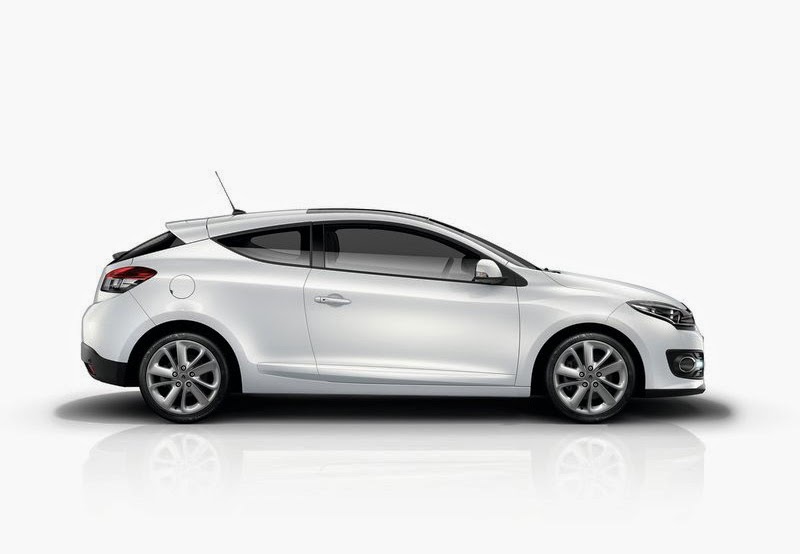
Renault Megane, 2014

Renault Megane, 2014, Luxury AutomobilessRenault Megane, 2014, Luxury Automobiless
 Renault Megane, 2014, Luxury AutomobilessRenault Megane, 2014, Luxury Automobiless
 Renault Megane, 2014, Luxury Automobiless
Renault Megane, 2014

The lines of the new-look Renault Mégane revealed shortly before the model's official presentation at the 2013 International Frankfurt Motor Show.
As Renault continues to deploy its new design identity across its model range, it is the Mégane line-up's turn to incorporate the brand's latest front-end styling.

The change ensures greater unity between the front ends of Mégane Hatchback, Mégane Estate and Mégane Coupé which feature the same bumper and bonnet, although each version maintains its own distinctive identity. They are also equipped with new elliptical headlights.

The new styling identity has been carried over to the line-up's sporty models, too. Mégane RS and Mégane GT both boast an even more dynamic stance and a new front-end design, as well as new headlights with gloss black eyelids.


Read More

Wednesday, July 2, 2014

Qoros 3 Estate Concept, 2013

Qoros 3 Estate Concept, 2013, Luxury Automobiless
 Qoros 3 Estate Concept, 2013, Luxury AutomobilessQoros 3 Estate Concept, 2013, Luxury Automobiless
 Qoros 3 Estate Concept, 2013

The Qoros 3 Estate Concept, featuring extended interior space, intelligent and flexible functionality, and elegant design, show how the new brand's compact segment model range might be expanded with an estate variant in the future. Qoros' modular platform provides the ideal basis for fast and efficient expansion of the model family, and the compact estate is becoming increasingly popular among European motorists. Its elegance and bold stature echo the Qoros styling themes introduced by the Qoros 3 Sedan, while the intelligently designed interior provides an incredibly versatile and adaptable space that allows luggage capacity to be adapted to individual needs.

An individual alternative to the classic sedan
Sales of compact segment estate cars are growing thanks to their more flexible capabilities to meet the diverse transport needs of ever more adventurous family lifestyles in Europe. The versatile trunk space provides additional flexibility and volume for luggage or other cargo, or to pursue leisure activities which might involve transporting bulky sports equipment, for example.

The practical advantages are married with the impressive driving dynamics and performance of the Qoros 3 Sedan, and the estate concept pleasingly adopts its timeless, elegant exterior design.

Signature design with distinctive touches
Based on the same platform as the Qoros 3 Sedan, the Qoros 3 Estate Concept is generously-proportioned for a compact segment estate. Appealing touches include the application of the horizontal design theme to highlight the long roof line flowing smoothly to the rear, and the large side windows that give the vehicle an elegant and elongated look.

Like the sedan, the concept has the characteristic Qoros face, featuring the same large headlamps which reach from the distinctive radiator grille far into the flanks. The rear lamp clusters are also identical to those on the product Qoros 3 Sedan, creating a strong family resemblance between the two models. The three bold horizontal LED taillight bars neatly suit the powerful rear, where the large tailgate opening features a convenient low loading sill.

Plenty of space and versatility in the interior
The wide-ranging options provided by the folding rear seatbacks and the ski hatch, as well as the numerous storage compartments and accessory attachments, offer prospective customers a highly versatile and functional vehicle, both for everyday driving and long-distance travel. The Qoros 3 Estate Concept is conceived for young families and other modern customers whose vehicle choice is based on an active, varied lifestyle.
Read More

Tuesday, July 1, 2014

Porsche 911 Turbo S, 2014

Porsche 911 Turbo S, 2014, Luxury Automobiless
 Porsche 911 Turbo S, 2014, Luxury AutomobilessPorsche 911 Turbo S, 2014, Luxury Automobiless
 Porsche 911 Turbo S, 2014, Luxury AutomobilessPorsche 911 Turbo S, 2014, Luxury Automobiless
 Porsche 911 Turbo S, 2014, Luxury Automobiless
Porsche 911 Turbo S, 2014

In introducing the new generation 911 Turbo and Turbo S, Porsche is presenting the top cars of the 911 model series in terms of technology and dynamic performance. 40 years after the world premiere of the first Turbo prototype, the Porsche 911 Turbo is redefining the limits of what is feasible in a sports car for everyday use

For 40 years now, the unique selling point of the 911 Turbo has been the extreme spread of its capabilities that range between dynamic performance and efficiency, between exclusivity and everyday practicality, between tradition and innovation. Advanced development of existing systems and the introduction of new active systems are extending this range in such a way that the 911 Turbo models have now cranked their top values up a notch in all individual disciplines. For example, the lap time of the new Porsche 911 Turbo S at the North Loop of the Nürburgring was reduced to well under 7:30 minutes - naturally with standard production tyres. This advances it into realms of dynamic performance that were previously only attainable by uncompromisingly designed super sports cars.

The two new top models also make a clear visual statement about their performance. The characteristic widely flared rear fenders of the new 911 Turbo generation are 28 mm wider than those of the 911 Carrera 4 models - a nearly level surface of more than a hand width extends out from the C-pillar to the outer edge of the car.

The new top models of the 911 model series arrive on the market at the end of September 2013. In Germany, the 911 Turbo costs 162,055 euros; the new 911 Turbo S costs 195,256 euros, including VAT and country-specific features. In the UK, the Turbo is priced from £118,349 and the Turbo S from £140,852. In the United States, the 911 Turbo is priced from $148,300 while the 911 Turbo S begins at $181,100, not including a destination charge of $950.

Independent, sporty and dynamic
The new 911 Turbo models have an unmistakable and independent look, which makes a clear statement about their special positioning within the 911 series and differentiates them from the competitive field. A key characteristic is the front body with its large cooling air intakes, independent front lights and fins in the lateral cooling air intakes that are all horizontally aligned.

In front, the new Porsche 911 Turbo S is distinguished by additional air scoops in black in the lateral cooling air openings. The front lights in LED technology each consist of a light frame, which is used in the 911 Turbo as a daytime running light and in the S model as a position light, and an integrated direction indicator. The Porsche 911 Turbo S makes its top position clear with standard full-LED headlights that feature four-point daytime running lights, which are available as an option in the 911 Turbo.

However, the special aspect of the new front body is the fact that the front spoiler is fully hidden in its retracted position. This gives the new top 911 a significantly lighter and more elegant frontal appearance. When the front spoiler is extended, however, the car shows its second performance-oriented face, and this is highlighted by the central "turbo" or "turbo S" badge on the lip of the black spoiler.

A focus on the key traits of a 911 Turbo is also apparent in a side view. At a standstill and in urban traffic, there is no spoiler lip to disturb the puristic form of the 911 front line. Clear and unmistakably typical of a Turbo, the air intake for the intercooler opens in front of the rear axle. Forming the visual end point of the so-called "fly line" is the characteristic rear fender, which is integrated more fully in the overall design in the new generation. The new 911 Turbo models give a significantly more dynamic overall appearance in side profile due to a combination of shorter body overhangs, front and rear, and an extended side line with a 100 mm longer wheelbase. Another visual accent is created by the new 20-inch forged aluminium wheels in bi-colour look. In the 911 Turbo, they have ten dual spokes, and in the S model they feature an especially fine structure with a strongly branched spoke design - and a hub lock.

Never before was a 911 more impressive when viewed from the rear. The new 911 Turbo generation has shoulders that are wider than those of any other 911. Above the rear axle, the body is 85 mm wider than at the front axle. The selected style of driving can be discerned from the adaptively adjustable rear wing. Retracted in its sub-shell at moderate speeds, it is extended at top speeds and is also tilted for a greater attack angle when maximum dynamic performance is required. Here, the form of the classic slotted wing was designed with even sharper lines, and together with the narrower wing base and the distinctive rear cover screen the wing is harmoniously integrated into the overall rear body design. The narrow rear lights of the new 911 generation in LED technology visually reinforce the broad shoulders of the new 911 Turbo models by their form and their further outboard mounting positions.

New body with greater rigidity and lower centre of gravity
The body of the new 911 Turbo models is based on the 911 Carrera body structure; as a result, it is based on intelligent lightweight design that utilises aluminium-steel composite construction. Along with extensive use of aluminium and polymer surfaces to reduce vehicle weight, the local use of ultra-high-strength steel offers high body rigidity for ideal occupant protection and excellent dynamic performance. The weight of the body-in-white was reduced 13 per cent compared to the previous models.

The basic concept represents the foundation for the substantial performance gains in the new 911 Turbo generation. Simply lengthening the wheelbase by 100 mm in conjunction with a wider track in front - 51 mm wider in the 911 Turbo and 49 mm wider in the Porsche 911 Turbo S - creates a completely new geometry with greater tracking and roll stability at high speeds on straight-aways and in bends. The lowered centre of gravity improves dynamic performance and agility, and the body's considerably greater rigidity provides the backbone for the highly precise chassis.

More spontaneous, quicker and more efficient
The entire powertrain of the new 911 Turbo models reflects the typical traits of advanced Porsche development. The turbocharged 3.8-litre six-cylinder with direct petrol injection produces 520 hp (383 kW) in the 911 Turbo and 560 hp (412 kW) in the S model. Porsche continues to be the only carmaker to offer two turbochargers with variable turbine geometry (VTG) in a petrol engine.

Power is transferred exclusively via a seven-speed Doppelkupplung (PDK), which in the top 911 cars now also enables the stop-start function with engine shutoff earlier while coasting to a stop and a separate coasting function. Together with a new thermal management system for the turbo engine, fuel efficiency technologies have reduced NEDC fuel consumption as much as 16 percent to 9.7 l/100 km, a figure that applies to both models.

Compared to previous models, the power level of the 911 Turbo was boosted by 20 hp (15 kW) and its torque was increased ten Newton metres to 660 Nm. In the S model, power was increased 30 hp (22 kW), and torque was increased ten Nm to 710 Nm. The increase in power of the new 911 Turbo was achieved primarily by improving engine efficiency with higher combustion pressures and new valve timing and ignition angle tuning. In the engine of the S model, charge pressure was increased to 1.2 bar to enhance power, and maximum engine speed was increased 200 rpm to 7,200 rpm. This lets the driver utilise an even broader engine speed range, and a higher connected speed with stronger drive torque at full load acceleration after a gear-shifting operation.

Overboost: power is boosted at the press of a button
The new sports cars perform even better in a sprint with the Sport Chrono package, which is standard equipment in the Porsche 911 Turbo S (optional in the 911 Turbo); for one, it offers increased torque. The "Overboost" function, which is being used in the Porsche 911 Turbo S for the first time, increases maximum charge pressure by around 0.15 bar for up to 20 seconds in the middle speed range; this increases maximum torque to 750 Nm. The pistons were reinforced and modified to ensure that the new 911 Turbo engines can withstand the higher loads associated with their higher power and torque values. Peak pressures were increased over ten per cent, and internal efficiency was significantly improved.

PDK with virtual intermediate gears
The achieved performance gains and reduced fuel consumption in the new top 911 cars is in part due to the further developed PDK Doppelkupplung which features new functions optimised for sporty driving.

For example, Porsche engineers supplemented the seven driving gears by adding virtual intermediate gears that further improve fuel economy and comfort. They are used to reduce engine speed during an undisturbed, constant-speed mode of driving, when the next higher gear would reduce engine speed below the specified lower speed limit. To do this, the transmission controller engages adjacent gear levels and controls the two clutches for defined slip in transferring the drive power. When the driver presses the accelerator pedal, the Doppelkupplung downshifts to the suitable gear with lightning speed. Since the PDK has oil-bath clutches, this innovative transmission function is wear-free.

Furthermore, the PDK's extended stop-start functionality now shuts off the engine while coasting to a stop, which saves more fuel. Both Turbo models also offer a coasting function that disengages the clutches in coasting phases, runs the engine at idle, and coasts the vehicle in neutral. This function can significantly improve fuel economy, especially on trips on motorways.

The dynamic engine speed adjustment feature delivers even quicker gear changes in both downshifts and upshifts. During downshifts, the controller outputs intermediate acceleration pulses which are relatively comfort-oriented in the base setting and very dynamic in the SPORT or SPORT PLUS modes. During upshifts, engine speed adjustment functionality utilises masking of engine injection in the SPORT modes. Both of these effects make gear shifts more acoustically impressive as well.

New all-wheel drive system with electro-hydraulic control
For even quicker and more specific power distribution to the two axles, Porsche developed its currently used all-wheel drive system (PTM) with electro-hydraulic control of its multi-plate coupling. This functional principle enables faster and more precise control of the coupling. The result is more dynamic and more precise control of drive forces to the front axle with benefits in traction and vehicle dynamics. In addition, the new system can now direct more drive torque to the front axle, whose transfer case was provided with a new water cooling system. At the same time, the optimised interaction of engine, transmission and all-wheel drive system improves sprinting capabilities of the new top 911 cars even more. With the optional Sport Chrono package, the 911 Turbo accelerates from zero to 100 km/h in 3.2 seconds, which is one-tenth of a second faster than the Porsche 911 Turbo S of the 997 model series. Its successor now covers the standard acceleration distance in 3.1 seconds.


Read More

Monday, June 30, 2014

Peugeot 308 SW, 2014

Peugeot 308 SW, 2014, Luxury AutomobilessPeugeot 308 SW, 2014, Luxury Automobiless
 Peugeot 308 SW, 2014, Luxury AutomobilessPeugeot 308 SW, 2014, Luxury Automobiless
 Peugeot 308 SW, 2014, Luxury AutomobilessPeugeot 308 SW, 2014, Luxury Automobiless
 Peugeot 308 SW, 2014

The Peugeot's engineers and designers have conceived and designed a grand dynamic estate car, with a low, classy and sporty allure. Taking the Peugeot i-Cockpit from the hatchback version, the new Peugeot 308 SW presents an innovative interior, resolutely modern and refined. Benefitting from the high flexibility of the new EMP2 platform, the new Peugeot 308 SW makes the most of its generous dimensions to provide a level of interior spaciousness and boot volume among the best in the segment. The boot also benefits from exemplary functionality and modularity.

Virtuous design (reduced weight, the use of innovative materials) and the use of new economical and efficient engines allows the Peugeot 308 SW to claim benchmark fuel consumption and emissions figures while also delivering unprecedented driving enjoyment for an estate car. The extensive range of equipment and high level of quality place the new Peugeot 308 SW among the best in its segment, supporting the ambitions for the brand and its move up-market.

A revitalised estate market in the C segment
Peugeot has been present in the C estate segment, where the new Peugeot 308 SW competes, for decades. Since the arrival of the 304 estate in 1969, every generation of the 300 series has included a successful estate variant.

The proportion of estates in the C segment is stable having has represented 10% of segment in Europe for many years. The appearance and then increased importance of crossovers and MPVs in the segment has not affected the proportion of estates.

A fluid and dynamic design
As with the hatchback, Peugeot's designers wanted to give preference to simplicity, balance and fluidity in the style. For the new Peugeot 308 SW, no pointless features, no ostentatious aggressiveness but rather an importance placed on quality in the way that materials and finishers are handled.

The front end of the new Peugeot 308 SW shares its character with the hatchback. So there is a grille framed in chrome and headlamps handled with great finesse to retain the brand's expressive and emblematic feline look. The Full LED technology (31 LEDs per headlamp), fitted as standard on the upper trim levels, provides a technological and distinctive lighting signature.

The profile of the Peugeot 308 SW is fluid and slender. Benefiting from the extended wheelbase (+11 cm compared to the hatchback) and rear overhang (+22 cm compared to the hatchback), the new Peugeot 308 SW clearly takes its place among the most dynamic and balanced estates in the segment.

The fluid profile is highlighted by a superb chrome window finisher surrounding the entire lateral glazed area. For the large rear quarter light, this finisher is in one piece and with varying crosssection. This technical and stylistic feat is usually found only on some vehicles from the segments above and underlines the refined dynamism in its profile.

The drop in the roof line, the angle formed at the back with the rear screen strengthens further the dynamism of the profile. Finally, the perfect integration of the aluminium longitudinal roof bars, discrete and elegant, completed the positioning of the new Peugeot 308 SW in the very exclusive world of exceptional estate cars.

The rear end, wide and slender, contributes towards the sporty impression of the new Peugeot 308 SW. The rear lamps, flowing round from the sides as on the hatchback, adopt an unusual and very technological C-form lighting signature through the use of 42 opalescent LEDs. With three more LEDs in each lamp unit for the brake lamp function, there are no less than 48 LEDs in the rear lamps. This signature, the shape of which enhances the vehicle's posture, recalls those on the 508 SW and 508 RXH, placing the new Peugeot 308 SW among the brand's family of great estate cars.

The drop in the roof line, the handling of the rear spoiler, the perfect integration of the 3rd brake lamp, taken from the 508 SW, the flush roof bars as far apart as possible, all strengthen the impression of width on the new Peugeot 308 SW.

A modern and bright interior
The interior design of the new Peugeot 308 SW is astonishingly pure, modern and technological.
It is based on an innovative concept for the instruments and controls: the Peugeot i-Cockpit. It is made up of four elements : a compact steering wheel for intense dynamic sensations, a head-up instrument panel so that information can be read without taking your eyes off the road, an enhancing tall centre console and a large 9.7" touch screen for an intuitive drive.

The quality of materials, the textiles used, the rigour of assembly and construction, have all been defined to place the new Peugeot 308 SW in the premium world. So the dashboard is fully padded, the steering wheel is trimmed with full grain leather from the 2nd trim level and the gloss black and satin chrome inserts are found throughout the cabin in areas used by the customer.

The near absence of buttons combined with the use of high quality materials, brings a purity unprecedented in the market.

A successful cabin arrangement
As with the hatchback, the new Peugeot 308 SW uses the PSA Group's new EMP2 platform. This "Efficient Modular Platform" allows considerable flexibility in configuration and settings, particularly for length. So the wheelbase is extended by two notches compared to the hatchback, making another 11 cm, used entirely for space at the rear, particularly for knee room, and for the boot volume. Access to the rear seats is optimised by the opening of the wider rear doors and by moving the rear seats back by 29mm.

The rear overhang is extended by 22 cm compared to the hatchback, allowing perfect arrangement of the rear, shared between:
  • a big increase in the depth of the boot, the sign of a very generous volume ;
  • a rear bumper that is slightly more prominent than on the hatchback, for better safety and protection of the body.
A compact and spacious estate
With a length of 4585 mm, width of 1804 mm and height of 1471 mm, the new Peugeot 308 SW offers ideal dimensions to allow it to meet the fundamental expectations of estate customers in the segment, particularly as regards the spaciousness of the interior and the volume of the boot.

The new Peugeot 308 SW's generous dimensions (though still normal for the segment) allow it to offer boot figures among the best on the market. The boot volume below the parcel shelf is remarkable at 610 dm3 VDA 210 (equal to 660 litres) made up of:
  •     556 dm3 VDA 210 (or 590 litres) above the boot floor
  •     54 dm3 VDA 210 (or 70 litres) spread among the storage spaces below the boot floor
A perfectly flat boot in no time
For easy and intuitive use, the new Peugeot 308 SW is fitted as standard with "Magic Flat" rear seats. This system allows instant folding of both parts of the rear seat by operating two controls easily accessible on the sides of the boot. Thanks to the automatic lowering of the rear seat cushions, the "magic" result is that a flat floor is obtained providing a total volume of 1660 dm3 VDA 214, made up of:
  •     1606 dm3 VDA above the carpet
  •     54 dm3 VDA in storage areas below the carpet
The success of this arrangement is not only in the volumes. The new Peugeot 308 SW benefits from a remarkably practical and useable boot:
  • the boot aperture, well finished, is of simple shape that benefits from the loading width, more than 1.06m up to the rear shelf
  • the length of the boot up to the rear seats is 1.07m
  • with a difference in height between the sill and the boot floor of only 33mm, the boot sill is among the lowest in the market, facilitating loading and unloading
  • the boot sides are perfectly upright and the intrusion of the rear wheel arches is minimal. Spaces can be arranged with removable dividers either side of the boot. An elastic strap on the left hand side trim allows small objects to be held
  • aluminium boot rails are available. they have four removable metal hooks for lashing voluminous objects
  • the retractable luggage cover is easy to use
  • under the boot carpet, storage is provided for the luggage cover and the removable lashing hooks in dedicated housings


Read More

Sunday, June 29, 2014

Opel Astra OPC Extreme, 2015

Opel Astra OPC Extreme, 2015, Luxury AutomobilessOpel Astra OPC Extreme, 2015, Luxury Automobiless
 Opel Astra OPC Extreme, 2015, Luxury AutomobilessOpel Astra OPC Extreme, 2015, Luxury Automobiless
 Opel Astra OPC Extreme, 2015

The Opel Astra OPC Extreme, which makes its world premiere at the 2014 Geneva Motor Show, is a real race-bred performance car. Developed on the Nürburgring Nordschleife, the most challenging race track in the world, it is powered by a 2.0-liter turbo engine with over 300 hp and equipped with all the key high-tech components from its racing peer, the Opel Astra OPC Cup. The Astra OPC Extreme was developed directly from the Cup version and brings pure racing technology to the road. If public reaction is as positive as expected, Opel plans a low-volume production run for the super sporty, street-legal Extreme.

Over 300 hp will be unleashed from under the Extreme's carbon fiber hood. Its 2.0-liter turbo gasoline engine, with direct injection and variable camshaft phasing, is quite simply the most powerful four-cylinder unit Opel has ever produced. The all-aluminum engine is mated to a slick, six-speed manual gearbox transmitting power through a limited-slip differential. This race-proven powerplant will have an easy time of it with the OPC Extreme, because the super sporty car is 100 kilograms lighter than a conventional Astra OPC thanks to its high-quality, carbon fiber components.

Used in Formula 1 racing to reduce weight, carbon composite is incorporated throughout the Extreme. This high-strength, ultra-light material is used for the aerodynamically-optimized rear wing, the diffuser, front spoiler, hood, suspension cross-bracing, the engine cover, complete wheels, rear wheelhouse ventilation and roof. The carbon wheels are 20 kilograms lighter than their aluminum counterparts. This is weight saving in a decisive area because unsprung mass is substantially reduced - much to the joy of engineers and driving fun of drivers. The inhouse manufactured carbon fiber roof is almost as light as a feather. It weighs just 2.6 kilograms, compared to a steel roof's 9.3 kilograms, and noticeably lowers the Astra Extreme's center of gravity. The fenders are made of aluminum and weigh only 800 grams a piece instead of 2.2 kilograms in steel.

The weight reduction in key areas greatly improves agility, overall handling and, of course, the car's power-to-weight ratio. As a result, the street-legal Extreme sweeps through fast curves as playfully and quickly as its racing brother in the Nürburgring Endurance Championship (VLN). Opel has also given the Extreme breathtaking stopping power to match, with a Brembo six-piston brake system including 370 mm diameter discs up front race car. Ultra high-performance, 245/35, 19-inch tires, specially developed for the Extreme, also play a key role and give almost as much grip as those on the race car. In addition, the chassis (spring/damper) is adjustable, just like in a real touring car racer.

The pursuit of uncompromised performance continues in the design of the Extreme'S cabin: the back seats are out and a safety roll bar is in. The driver and co-driver are perfectly positioned in specially-designed Recaro bucket seats, complete with six-point safety belts from Schroth. In the Astra OPC Extreme, the crew doesn't just sit in the car, they are fully integrated as part of the vehicle itself. The driver also has the tactile pleasure of gripping a superb, carbon-fiber-reinforced, suede-covered steering wheel with fine yellow decorative stitching. Opel Motorsport's core color also dresses up the Astra OPC Extreme elsewhere, for instance in the exclusively designed logo and as lacquer on the side sills and front spoiler lip.

The Astra GTC body format - the base model for the OPC Extreme - ideally embodies Opel's sculptural design philosophy. Its flowing, sculpted shapes and precise accents blend into dramatic proportions. The Astra OPC Extreme's multi-layer paint lacquer is combined with high-quality decal details to give a three-dimensional effect, further emphasizing the car's clean edges, bold lines and athletic proportions.


Read More