Showing posts with label 2012. Show all posts

Monday, April 21, 2014

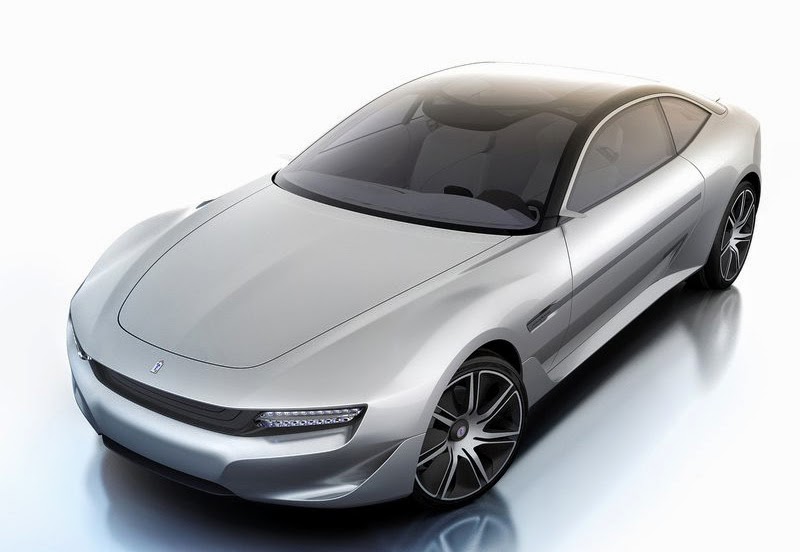
Pininfarina Cambiano, 2012

Pininfarina Cambiano, 2012, Luxury Automobiles Pininfarina Cambiano, 2012, Luxury Automobiles
 Pininfarina Cambiano, 2012, Luxury Automobiles Pininfarina Cambiano, 2012, Luxury Automobiles
 Pininfarina Cambiano, 2012, Luxury Automobiles Pininfarina Cambiano, 2012, Luxury Automobiles
 Pininfarina Cambiano, 2012, Luxury Automobiles Pininfarina Cambiano, 2012, Luxury Automobiles
 Pininfarina Cambiano, 2012

It is a new approach to luxury in the car, according to Pininfarina's school of thought. The Cambiano is launched, a concept car that is elegant and sporty, refined and comfortable. An enticing combination of pure, cutting edge design and uncompromising engineering that respects the environment in both in the engine and in the choice of materials.

The Cambiano is an expression of Pininfarina today, embodying all the company's skills in terms of style, planning and research in the field of sustainable mobility. It is no coincidence that its chosen name is that of the town where Pininfarina has its headquarters. In 2012 the company celebrates a dual anniversary: the 30th anniversary of the Style Centre, which was set up in Cambiano in 1982 as "Pininfarina Studi e Ricerche", and the 10th anniversary of the Engineering Centre, which was inaugurated there in 2002, adding contract engineering to its activities of styling and niche design/production, and concentrating cutting edge technological tools and a team of outstanding specialists in one place.

The luxury sports saloon embodies the innovative archetypes of Pininfarina design in full. Another example was a milestone in the company's history, the Florida II, a concept car of 1957 which the founder Pinin Farina conceived and built for his own personal use, a saloon-coupé with an architecture and line that influenced global production for many years. In a way, it was Pininfarina's first real concept car.

The Cambiano redefines and reinterprets the ideas that are the basic tenets of Pininfarina design: harmonious proportions, taut lines and fluid surfaces, and a simple element that extends all along the side to underline its dynamism. The result is a very strong visual impact, emphasised by an extremely pure, aerodynamic shape based on essential and purely functional stylistic elements.

The Cambiano breaks with the general trend of design that is overloaded with elements, and confidently embraces the return of pure form as the absolute value, in the best "tradition" of Italian Style, reflecting the deepest essence of Pininfarina Design.

The Cambiano reveals its true character at first glance, starting from the unconventional layout of the doors: on the driver's side the car is a sports coupe with a single door, but on the passenger side there are two doors that open from the centre with no central pillar. This simplifies access and makes the most of the spacious, luminous passenger compartment.

The Cambiano is an expression of the car as a global project, and there is total consistency between every detail of the exterior and interior design, and between the colours, materials and the use of technology. Elegance and formal harmony blend in the association of complementary values: balance and contrast, the relation between full and empty, between solid and transparent. Formal purity and simplicity become elements of iconic design.

The proportions of the Cambiano convey dynamism and fluidity, thanks to the low tapered front and the light, fleeting rear-mounted cabin. The body of the car is one of simple, solid volumes, with large taut but sensual surfaces, enhanced by the innovative golden grey colour and iridescent blue reflections specifically developed for this project by Standox. The metal inserts in the sides are a new take on decorative mouldings and they continue all along the side glazing, incorporating the lighting and opening functions of the doors. The large honeycomb roof is ethereal and transparent and completes the body of the car, imparting a sense of solidity and of elegant refinement.

The front, with its clean, essential design, returns to a motif that is typical of Pininfarina: headlights incorporated into the grille and protruding wheel arches. The grille also incorporates a dynamic opening that is an air inlet for the turbo. The LED front headlights are simple "blocks" of pure, crystalline light. The tail lights and side indicators are almost intangible: only the light exists, appearing as if by magic on the surface of the bodywork. In the purest spirit of Pininfarina, the essentiality of the form becomes a very elegant expression of pure function.

The light is an integral part of the Cambiano design concept, inside and out. The relationship with natural light is simplified by the panoramic roof, which is translucent in some areas and transparent in others. With a carbon honeycomb structure mounted between the outside glass and a polycarbonate inner lining, the roof enhances visibility in the car - heightening the sense of luminosity and space inside.

The light is not only a natural element, but also emphasises the sensory experience of the passenger compartment thanks to a refined and functional lighting system, which exploits light channels inserted into the ceiling, the doors and the floor. The Cambiano is the first car to incorporate into the passenger compartment a contemporary video-art projection, created specifically by the Spanish artist Javier Fernandez with a very personal language of manipulated, overlapping images. The work is projected onto the ceiling where it can be enjoyed by rear seat passengers during the drive. Contemporary art, a preeminent feature of luxury, is thus incorporated into the concept of the car, leaving behind its elite aura and becoming accessible.

The complementarity between apparently contrasting elements is also expressed in the interior. Natural materials contrast with sophisticated details, and the physicality of pure matter with the immateriality of the most advanced forms of communication, which simplify the interaction between the driver and the car and his surroundings. It is a fascinating mixture of luxury craftsmanship and innovation: exclusive materials and outstanding manual work combined with the use of advanced technologies and innovative concepts.

Elegant and modern design converges in the interior with comfort, ergonomics and environmental sustainability, maintaining the same stylistic approach of the exterior. Fluid, sensual surfaces, a light, essential environment, with clearly defined functional zones: interactive controls and surfaces turned towards the driver, a more comfortable and tactile area for the other passengers. A fine, light facia, light but enveloping front seats suspended between the consoles and the sill, in a delicate balance between solid and hollow designed to create tension. The asymmetrical access to the passenger compartment determines the leaf structure of the two rear seats, which are almost suspended in the car, where occupants enjoy an environment that is made more comfortable and refined by the generous legroom. The interior is upholstered with Foglizzo leather, personalised in certain points with a special diamond point punched patter. The leather used on the Cambiano was chosen from the Pininfarina Leather Collection for Foglizzo, a collection of personalised natural and imitation leathers developed by the two Turin companies. The uprights and door panels are upholstered with polylactic acid, a plastic derived from sugar substances, treacle and milk serum, a solution that reduces the use of petroleum.
Read More

Pagani Huayra, 2012

Pagani Huayra, 2012, Luxury Automobiles Pagani Huayra, 2012, Luxury Automobiles
 Pagani Huayra, 2012, Luxury Automobiles Pagani Huayra, 2012, Luxury Automobiles
 Pagani Huayra, 2012, Luxury Automobiles Pagani Huayra, 2012, Luxury Automobiles
 Pagani Huayra, 2012, Luxury Automobiles Pagani Huayra, 2012, Luxury Automobiles
 Pagani Huayra, 2012, Luxury Automobiles
Pagani Huayra, 2012

The eternity of the element air. Gentle and refined, yet the strength of the wind it is able to erode even the toughest of materials giving birth to distinctive shapes known in nature. Elegant and muscular the Pagani Huayra merges the past, present and future in a timeless interpretation of automotive art.

The styling of the car was perfected over the course of 5 years to find each line's beginning and end. During this study, eight scale models were created, as well as two 1:1 models, each an evolution of the previous in a never ending quest to perfect the form and refining the substance.

The bi-xenon headlamps are just one of the many precious gifts from the Zonda R, and LED daytime running lights are seamlessly integrated in the elliptical shape of the design. The rear bumper integrates with the diffuser and is dominated by an elliptical frame that surrounds the four central exhaust outlets, now becoming a characteristic Pagani element.

Backbone
The new central monocoque on the Pagani Huayra is an entirely new design made from carbontitanium. However, with the gull wing doors cutting deep into the roof, much research was focused on achieving the highest levels of rigidity through the application of new advanced composite materials and technologies first tested on the Zonda R. The fuel tank is located integrally in the best protected area of the monocoque, behind the driver, reinforced by safety cell made of different composite and ballistic materials. The front and rear CrMo subframes offer an exceptional rigidity-to-weight ratio to allowing the suspensions to work at their best while incorporating an advanced energy absorbing crash structure, ready to protect the occupants in the unlikely event of an impact.

The never ending quest for weight reduction resulted also into the combination of structural and non-structural or aesthetical elements. An example is the integration of all ventilation air ducts into the monocoque's structure, making the use of additional parts and ducts unnecessary.

The result of this attention to detail is a vehicle weighing 1.350 kg making the Pagani Huayra the lightest sportscar in its class.

Heart
Mercedes-AMG provides the heart for the Pagani Huayra. The 60 degree 12 cylinder turbocharged engine with a displacement of 5980 cm3 has been developed not just to meet the strictest technical and quality requirements, but also to give the car its many faces.

The calm and harmony of driving one of the world's most refined GT car is interrupted when the driver calls upon the Pagani Huayra to unleash its 700 horsepower and 1000 Nm of torque. The turbos have been studied to offer immediate response to the slightest throttle input, giving the driver full control over the engine at any rpm and preventing unwanted delays in the delivery of power.

The engine's systems have been designed and tested to stand up to the most adverse conditions of temperature and performance. The Pagani Huayra has been subjected to the highs of Death Valley and the lows of the Arctic Circle. The two lateral radiators are positioned in the front to guarantee the best cooling efficiency of the intercoolers placed over the cylinder heads. Dry sump lubrication ensures an optimal oil feed to the engine even when the car is subjected to the most extreme lateral accelerations. It also regulates the oil flow so that only the necessary amount of lubricant is actually pumped into the engine from the external oil tank, reducing the friction caused by an excessive volume of lubricant inside the engine sump. An oil/water heat exchanger reduces warm-up times by heating the engine lubricant during cold start and keeps engine coolant and lubricant levels at steady operational temperatures. Extensive weight saving programs led to ingenious yet simple solutions. In order to reduce hoses and connections as much as possible is built directly to the engine. The intercooler covers serve as expansion tanks to the low temperature circuit and the engine coolant circuit. The vertical fins contribute to the cooling of the tanks.

The M158 engine is homologated to meet the strictest environmental regulations, EU5 and LEV2. Despite the increase of power compared to the other Mercedes-AMG V12 engines developed for Pagani, CO2 emissions as well as the fuel consumption have been reduced, to make the Pagani Huayra class leading amongst 12 cylinder sports cars with values that are respective of much smaller vehicles in the market. The two stage fuel supply system features two microprocessor controlled pumps feeding fuel to the engine with the second pump only activated when necessary, thus reducing the energy required to run the fuel pumps and eliminates the waste of excessive fuel being transported and heated in the fuel lines. This efficiency combined with a large 85 liter fuel tank ensure Pagani Huayra's grand touring ability.

As an homage to the decennial tradition of Mercedes-AMG in building world class sports car engines, the M158 displays the historic AMG emblem on the intake manifold alongside the name of the technician that assembled the engine by hand at the Mercedes-AMG headquarters in Affalterbach, Germany.

The Titanium exhaust system has been engineered by MHG-Fahrzeugtechnik and is a direct application of race proven technologies on a high performance road car and the complete exhaust weighs less than 10 kg. Hydroformed junctions are used to reduce backpressure and guarantee a free flow of the exhaust gasses. Titanium guarantees a low weight in the muffler area while Inconel guarantees reliability on the parts of the exhaust more exposed to high temperatures. Careful attention has been paid to the tuning of its sound, which has led to a harmonic rumble at idle speeds with a hint of the power that lies hidden at low speed and a deep thunderous growl of motor and air, reminiscent of an airplane, at high speeds.


Read More

Sunday, April 6, 2014

Tesla Model X Prototype, 2012

Tesla Model X Prototype, 2012, Autos, Luxury Automobiles, Automotive, Car ConceptTesla Model X Prototype, 2012, Autos, Luxury Automobiles, Automotive, Car Concept
 Tesla Model X Prototype, 2012, Autos, Luxury Automobiles, Automotive, Car ConceptTesla Model X Prototype, 2012, Autos, Luxury Automobiles, Automotive, Car Concept
 Tesla Model X Prototype, 2012, Autos, Luxury Automobiles, Automotive, Car Concept
Tesla Model X Prototype, 2012

Tesla Model X is an all electric SUV scheduled for early 2014. It is equipped with unique Falcon Wing doors that open up and out of the way, allowing one to stand up in the second row and step directly to the third row. Built on the same platform as Model S, but with a longer wheelbase, Model X has approximately the same external dimensions of an Audi Q7. On the inside, however, Model X has 40% more room than a Q7 and is capable of carrying both seven large adults and considerable luggage.

It offer dual motor all wheel drive for superior all-weather driving and the option of a 60 or 85 kWh battery. The Model X Performance version accelerate from 0 to 60 miles per hour in 4.4 seconds. This would make Model X faster than many sports cars, including the Porsche 911 Carrera. Matched with superior handling resulting from its low center of gravity, Model X offer a remarkable combination of functionality, style and performance.

Tesla's touchscreen, the 17" in-dash display that includes driver controls, vehicle apps, web connectivity and onboard charging are included in Model X.

Model X priced competitively with other premium SUVs. It built at the Tesla Factory in Fremont, CA. Production begins at the end of 2013, deliveries begin early 2014, with volumes targeted at 10,000-15,000 units per year.
Read More