Tuesday, April 22, 2014

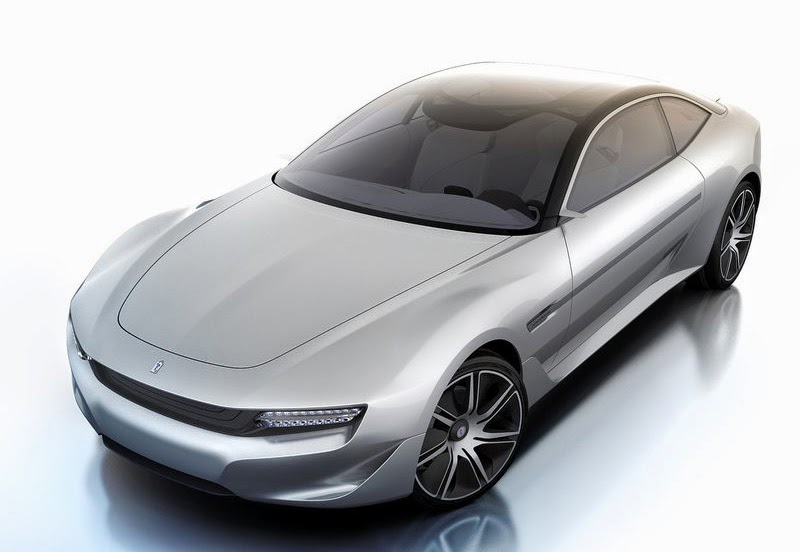
Qoros 3 Sedan, 2014

Qoros 3 Sedan, 2014, Luxury Automobiles
 Qoros 3 Sedan, 2014, Luxury AutomobilesQoros 3 Sedan, 2014, Luxury Automobiles
 Qoros 3 Sedan, 2014, Luxury AutomobilesQoros 3 Sedan, 2014, Luxury Automobiles
 Qoros 3 Sedan, 2014, Luxury AutomobilesQoros 3 Sedan, 2014, Luxury Automobiles
 Qoros 3 Sedan, 2014

The elegant compact (C-segment) car will be launched in China in the second half of 2013, with first sales in Europe starting later in the year. The vehicle is entering a pre-production development phase after two summers and two winters of extensive testing at key locations around the world.

The styling of the Qoros 3 Sedan draws heavily on contemporary German-influenced automotive design and introduces a distinctive brand identity. A unique, advanced eight-inch touchscreen infotainment system, developed in-house by Qoros, will be fitted as standard across the Qoros 3 Sedan range.

The compact Qoros 3 Sedan offers class-leading interior space for maximum passenger comfort. A primary objective from the earliest stages of the vehicle engineering programme was to achieve high scores in both Chinese and European crash assessments. Qoros employs modern safety technology and has put the Qoros 3 Sedan through a rigorous testing regime in helping it meet this objective.

Two efficient four-cylinder 1.6-litre gasoline engines will be available at the launch of the Qoros 3 Sedan in China, both of which feature VVT (variable valve timing), and which will challenge for class-leadership in China in terms of performance and efficiency.

The naturally-aspirated unit delivers an output of 93 kW (126 bhp) and 155 Nm maximum torque. The turbocharged version offers 115 kW (156 bhp) and 210 Nm maximum torque. Both engines are combined with a six-speed manual transmission as standard, with an optional six-speed dual clutch transmission available for both. A stop-start system will also be available.

Elegant design with class-leading interior space
The styling of the Qoros 3 Sedan was undertaken from a clean sheet by the Qoros design teams in Munich and Shanghai under the direction of Executive Director of Design, Gert Volker Hildebrand. It establishes the design direction for the entire Qoros model family and draws on contemporary German-influenced automotive design to exhibit a timeless, desirable elegance.

Driven by the theme 'Creating Future History', Gert Hildebrand's team set out to ensure that every model in the Qoros family is instantly recognisable as a Qoros. Key elements introduced with the Qoros 3 Sedan include an athletic, elegant profile, short overhangs, a coupé-like silhouette and a roof which flows smoothly into the strong rear quarters.

The Qoros engineering team established from the earliest stages of the development programme that the compact platform's design should incorporate a long wheelbase and generous proportions. At 4,615 mm long, 1,839 mm wide and 1,445 mm high, the sedan's athletic, elegant styling also presents a solid, well-planted profile. It features horizontal styling themes along and across the body that highlight its length and width.

The Qoros 3 Sedan has one of the longest wheelbases in the compact segment, at 2,690 mm. A striking contour edge running continuously from the headlamps to the door handles and on to the rear light clusters emphasises the seamless, cleanly sculptured bodysides. In conjunction with the striking accentuation strip in matt aluminium that runs above the side sill between the wheel arches, this contour edge visually stretches the silhouette even further.

At the front, the contours of the bonnet form a dynamic curve, and the front section is designed to meet the highest standards of crash safety and pedestrian protection.

The rear doors feature a 'hockey-stick' rear window line that extends into the C-pillar to allow easier access for occupants into the rear seats. Subtly flared wheel arches reflect the overall elegant styling theme without overtly interrupting the bodyside's lateral flow.

Wheel sizes start at 16 inches, compared to the 15-inch entry-level wheel size for most compact segment cars, and the Qoros 3 Sedan can be specified with wheels up to 18 inches, highlighting the car's unusually wide track, once again conveying solidity. Several alloy wheel design and size combinations will be available at launch. The bespoke-designed triple-split eight-spoke alloy wheel, with gloss black inner and matt silver outer surfaces are highly distinctive and are destined to become a hallmark Qoros feature.

Unmistakable "brand face"
The Qoros 3 Sedan introduces a characteristic "brand face", refined in its proportions and surface finishes, that will become familiar on future models in the Qoros family.

The top of the dual-section radiator grille is at the same height as the headlamp units and creates a striking contrast with the overall horizontal orientation of the car's face. The radiator grille forms an equal-sided trapezoid with a wide chrome bar as its upper edge and a second chrome bar at the bottom edge of the lower air intake. The grille itself has also been carefully designed with a mesh of matt black 'clouds' to hide the radiator fans behind - another neat styling finish.

The Qoros logo - also developed under the direction of Gert Volker Hildebrand - proudly occupies a central point within the upper contour line of the radiator grille. The horizontally stretched Q incorporates the full 'Qoros' brand name in uppercase letters in a tactile three-dimensional chrome and gloss-black arrangement.

The front and rear lamp clusters were another defining feature on which Gert Hildebrand's team paid painstaking attention to detail. The distinctive daytime running lights are horizontally positioned LED bars at the upper edge of the headlamp modules. The same applies to the three horizontal LED light bars in the wide rear lamp clusters that dominate the rear quarter flanks.

Interior: class-leading space
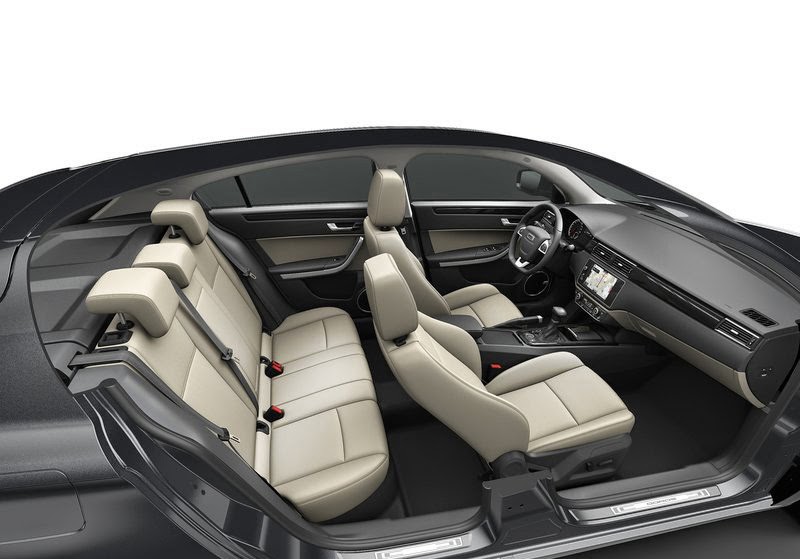
The Qoros 3 Sedan offers its five passengers remarkably generous interior space for a compact segment car, and is again dominated by a horizontally-oriented design theme that emphasises the length and width of the cabin. The elegance of the exterior continues inside. The steering wheel, which features a flat lower edge, sits in front of a 'floating' instrument panel and centre console that maximises the feeling of interior spaciousness.

The combination of thin red LED light strips along each edge of the central console and discreet red LED lighting in the door handles create a warm, welcoming interior ambience. This, as well as the instrument cluster displays that illuminate immediately when any one of the car doors is opened, emphasises the feeling of passenger cabin quality.

A high-resolution TFT display at the centre of the instrument cluster provides crucial information to the driver, including vehicle range and next-turn directions from the navigation system.

The Qoros 3 Sedan boasts a luggage compartment of 450 litres. The 60:40 split rear seatbacks fold down individually to optimise cargo carrying flexibility and incorporate a ski-hatch allowing the car to accommodate long items.

As well as a 2.8-litre glovebox (which will be air conditioned on top specification models), there are nine further storage compartments, including in the front centre console, front arm rest, as well as wide door pockets in all four doors, and rigid front seatback pockets for rear seat passengers. There are bottle holders in the front door pockets, two large cupholders in the front centre console, and two cupholders in the rear centre armrest.
Read More

Porsche 911 RSR, 2014

Porsche 911 RSR, 2014, Luxury AutomobilesPorsche 911 RSR, 2014, Luxury Automobiles
 Porsche 911 RSR, 2014, Luxury AutomobilesPorsche 911 RSR, 2014, Luxury Automobiles
 Porsche 911 RSR, 2014, Luxury Automobiles
 Porsche 911 RSR, 2014, Luxury Automobiles
Porsche 911 RSR, 2014

The Porsche 911 RSR shone 2013 with magnificent first and second place finishes (GT-Class). The GT racer from Weissach, which is distinguished by its systematic lightweight design and refined aerodynamics, has been further improved in many aspects for 2014. And with success: it started the 2014 season impressively as class victor at the 24-hour race at Daytona.

The 911 RSR, which is used in the 24 Hours of Le Mans and the new United Sports Car Championship in the USA and Canada as part of the WEC World Sportscar Championship series, made its appearance in 2013 as a successor to the successful 911 GT3 RSR. It is based on the seventh generation of the 911 sports car icon. As in its production car counterpart, its wheelbase was lengthened by a full ten centimetres. A new wishbone front suspension replaces the previously used MacPherson sprint strut suspension. The lightweight racing gearbox is also a special new development by Porsche Motorsport. Its six gears are shifted by shift paddles on the steering wheel. The 470 hp four-litre flat six engine was taken from the previous model and optimised in its details.

One of the central focuses in developing the 911 RSR was to attain a balanced weight distribution. The vehicle's centre of gravity is also significantly lower than in the previous model. Carbon fibre material assumes a special significance here. The front and rear wings, front and rear lids, the doors, underbody, wheel arch panels, rear wing, dashboard and centre console are made of this exceptionally lightweight and strong material. In addition, all windows are made of very thin and lightweight polycarbonate. The familiar lightweight lithium-ion battery of the GT street models also makes a contribution towards weight savings.

More service-friendly for shorter pit stops
The look of the new 911 RSR is marked by broad flared wings and a deep cooling air channel at the front end. The new air flow system enables a centrally located radiator at the front end, which operates even more efficiently than in the previous model. Climate control of the interior was also made more efficient. For enhanced service friendliness and shorter repair times, a quick-change concept for body parts was tuned for long-distance racing. The nose, front lid and rear apron are attached with quick-action clamps and can be replaced within just a few seconds.

The static cornering lights that are positioned very low in the front end improve the driver's view in bends. This improves night-time driving safety. The reflective labels on cockpit controls, combined with anti-glare interior lighting, provide for optimal legibility in darkness. The layout of switches on the new steering wheel was developed together with the Porsche factory drivers. From the outset, they contributed their wealth of experience in GT motorsport to the design of the 911 RSR.

Numerous improvements
The 911 RSR was systematically further improved for the 2014 season. The redesigned front end, for example, and the new rear wing provide for optimal aerodynamic balance and therefore for greater stability in fast driving through bends. Even more precise steering response, which leads to better vehicle handling in bends at slow and moderate speeds, was attained by optimising front suspension kinematics. Further improvements to the car's structural rigidity result in more precise steering response. Also new is the engine air induction system, which was optimised in its details, such as in its air filter geometry, which contributes towards reducing the effects of contamination on power output. The new FT3 safety fuel tank with a lowered centre of gravity enables improved filling under race conditions.

Live telemetry that is permanently transmitted to the command station via the car's roof antenna ensures that engineers are always well informed of all relevant vehicle data with over 200 measurement values. In addition, all data is stored on a memory card in the vehicle.
Read More

Pontiac G8 Sport Truck, 2010

Pontiac G8 Sport Truck, 2010, Luxury AutomobilesPontiac G8 Sport Truck, 2010, Luxury Automobiles
 Pontiac G8 Sport Truck, 2010, Luxury AutomobilesPontiac G8 Sport Truck, 2010, Luxury Automobiles
 Pontiac G8 Sport Truck, 2010, Luxury AutomobilesPontiac G8 Sport Truck, 2010, Luxury Automobiles
 Pontiac G8 Sport Truck, 2010

The 2010 Pontiac G8 sport truck blurs the line between cars and trucks and is creating an all-new segment in the North American car market. This dramatically different vehicle blends the sporty handling of a performance coupe with the cargo capabilities of a light truck.

Based on the all-new Pontiac G8 performance sedan, the newest member of the G8 family has a longer wheelbase and a cargo bed suitable for either work or recreation. The Pontiac G8 sport truck significantly stretches Pontiac's commitment to style and performance and is expected to arrive in dealers' showrooms in late 2009.

The Design
The Pontiac G8 sport truck maintains the same sporty exterior design as its namesake sedan. Flared fenders wrap around the 18-inch wheels and give it a wide, confident stance. The roofline has a coupe-like profile that reflects the vehicle's performance pedigree.

The doors, roof and exterior panels aft of the B-pillars are unique from the G8 sedan. One-piece outer body panels give the vehicle a sleek appearance. Wrap-around taillamps and fully concealed tailgate hinges add to the sculpted look. A color-coordinated, soft tonneau cover conceals and protects items in the cargo bed from the weather.

The Performance
The sport truck draws its strength from the same powerful 6.0L V-8 engine used in the G8 GT. It puts out 361 horsepower (270 kW) and 385 lb.-ft. (522 Nm) of torque. The combination of a six-speed automatic transmission and Active Fuel Management technology provides both car-like fuel economy and an unexpected 0-to-60 time of 5.4 seconds.

While these performance numbers are respectable by sports car standards, the Pontiac G8 sport truck offers flexibility unlike that of a sports car. A 73.9-inch (1878 mm) cargo bed has 42.7 cubic feet (1208 L) of cargo space and a durable composite bed liner. It also can carry a payload of more than 1,074 pounds (488 kg) and tow a 3,500-pound (1,600 kg) trailer.

The Structure
The Pontiac G8 sport truck is based on the same rear-wheel-drive architecture as the G8 performance sedan. However, the sport truck's body structure was reinforced in key areas to support its cargo and towing duties. More than 60 new components were added to strengthen the structure. Compared to the sedan, the 118.5-inch (3,009 mm) wheelbase is approximately four inches longer and the overall length is six inches longer.

Suspension and wheels
A four-wheel independent suspension with electronic stability control delivers confident handling, whether loaded with weekend home-improvement supplies or towing a pair of personal watercraft to the lake.

The steering box is located ahead of the front axle line for a quick, direct feel. The sport truck's front stabilizer bar is one mm larger than the sedan, and the rear suspension has been enhanced to support payloads without adversely affecting handling.

The Pontiac G8 sport truck rides on 18-inch machine-faced aluminum wheels with a P245/45R18 summer performance tire. All-season tires are available. An optional Sports Package includes 19-inch machine-faced aluminum wheels with P245/40R19 summer performance tires.

Brakes and steering
The sport truck shares the G8 GT's four-wheel disc brake system, featuring 12.64-inch front and 12.76-inch rear rotors. Front rotor thickness is 1.0 inch, while the rear rotors are 0.87-inch thick. Twin-piston, front alloy calipers and vented rotors and single-piston, alloy rear calipers with vented rotors are standard, as is ABS.

Comfort and convenience
Given its heritage, it's not surprising that the Pontiac G8 sport truck offers many of the same creature comforts as the G8 GT:
    Air conditioning with electronic dual-zone climate control
    Cruise control
    Driver Information Center
    Bluetooth connectivity
    Tilt/telescoping steering wheel with DIC and radio controls
    Power windows/locks/mirrors
    Remote keyless entry and remote start
    Theft-deterrent alarm system
Read More

Monday, April 21, 2014

Pininfarina Cambiano, 2012

Pininfarina Cambiano, 2012, Luxury Automobiles Pininfarina Cambiano, 2012, Luxury Automobiles
 Pininfarina Cambiano, 2012, Luxury Automobiles Pininfarina Cambiano, 2012, Luxury Automobiles
 Pininfarina Cambiano, 2012, Luxury Automobiles Pininfarina Cambiano, 2012, Luxury Automobiles
 Pininfarina Cambiano, 2012, Luxury Automobiles Pininfarina Cambiano, 2012, Luxury Automobiles
 Pininfarina Cambiano, 2012

It is a new approach to luxury in the car, according to Pininfarina's school of thought. The Cambiano is launched, a concept car that is elegant and sporty, refined and comfortable. An enticing combination of pure, cutting edge design and uncompromising engineering that respects the environment in both in the engine and in the choice of materials.

The Cambiano is an expression of Pininfarina today, embodying all the company's skills in terms of style, planning and research in the field of sustainable mobility. It is no coincidence that its chosen name is that of the town where Pininfarina has its headquarters. In 2012 the company celebrates a dual anniversary: the 30th anniversary of the Style Centre, which was set up in Cambiano in 1982 as "Pininfarina Studi e Ricerche", and the 10th anniversary of the Engineering Centre, which was inaugurated there in 2002, adding contract engineering to its activities of styling and niche design/production, and concentrating cutting edge technological tools and a team of outstanding specialists in one place.

The luxury sports saloon embodies the innovative archetypes of Pininfarina design in full. Another example was a milestone in the company's history, the Florida II, a concept car of 1957 which the founder Pinin Farina conceived and built for his own personal use, a saloon-coupé with an architecture and line that influenced global production for many years. In a way, it was Pininfarina's first real concept car.

The Cambiano redefines and reinterprets the ideas that are the basic tenets of Pininfarina design: harmonious proportions, taut lines and fluid surfaces, and a simple element that extends all along the side to underline its dynamism. The result is a very strong visual impact, emphasised by an extremely pure, aerodynamic shape based on essential and purely functional stylistic elements.

The Cambiano breaks with the general trend of design that is overloaded with elements, and confidently embraces the return of pure form as the absolute value, in the best "tradition" of Italian Style, reflecting the deepest essence of Pininfarina Design.

The Cambiano reveals its true character at first glance, starting from the unconventional layout of the doors: on the driver's side the car is a sports coupe with a single door, but on the passenger side there are two doors that open from the centre with no central pillar. This simplifies access and makes the most of the spacious, luminous passenger compartment.

The Cambiano is an expression of the car as a global project, and there is total consistency between every detail of the exterior and interior design, and between the colours, materials and the use of technology. Elegance and formal harmony blend in the association of complementary values: balance and contrast, the relation between full and empty, between solid and transparent. Formal purity and simplicity become elements of iconic design.

The proportions of the Cambiano convey dynamism and fluidity, thanks to the low tapered front and the light, fleeting rear-mounted cabin. The body of the car is one of simple, solid volumes, with large taut but sensual surfaces, enhanced by the innovative golden grey colour and iridescent blue reflections specifically developed for this project by Standox. The metal inserts in the sides are a new take on decorative mouldings and they continue all along the side glazing, incorporating the lighting and opening functions of the doors. The large honeycomb roof is ethereal and transparent and completes the body of the car, imparting a sense of solidity and of elegant refinement.

The front, with its clean, essential design, returns to a motif that is typical of Pininfarina: headlights incorporated into the grille and protruding wheel arches. The grille also incorporates a dynamic opening that is an air inlet for the turbo. The LED front headlights are simple "blocks" of pure, crystalline light. The tail lights and side indicators are almost intangible: only the light exists, appearing as if by magic on the surface of the bodywork. In the purest spirit of Pininfarina, the essentiality of the form becomes a very elegant expression of pure function.

The light is an integral part of the Cambiano design concept, inside and out. The relationship with natural light is simplified by the panoramic roof, which is translucent in some areas and transparent in others. With a carbon honeycomb structure mounted between the outside glass and a polycarbonate inner lining, the roof enhances visibility in the car - heightening the sense of luminosity and space inside.

The light is not only a natural element, but also emphasises the sensory experience of the passenger compartment thanks to a refined and functional lighting system, which exploits light channels inserted into the ceiling, the doors and the floor. The Cambiano is the first car to incorporate into the passenger compartment a contemporary video-art projection, created specifically by the Spanish artist Javier Fernandez with a very personal language of manipulated, overlapping images. The work is projected onto the ceiling where it can be enjoyed by rear seat passengers during the drive. Contemporary art, a preeminent feature of luxury, is thus incorporated into the concept of the car, leaving behind its elite aura and becoming accessible.

The complementarity between apparently contrasting elements is also expressed in the interior. Natural materials contrast with sophisticated details, and the physicality of pure matter with the immateriality of the most advanced forms of communication, which simplify the interaction between the driver and the car and his surroundings. It is a fascinating mixture of luxury craftsmanship and innovation: exclusive materials and outstanding manual work combined with the use of advanced technologies and innovative concepts.

Elegant and modern design converges in the interior with comfort, ergonomics and environmental sustainability, maintaining the same stylistic approach of the exterior. Fluid, sensual surfaces, a light, essential environment, with clearly defined functional zones: interactive controls and surfaces turned towards the driver, a more comfortable and tactile area for the other passengers. A fine, light facia, light but enveloping front seats suspended between the consoles and the sill, in a delicate balance between solid and hollow designed to create tension. The asymmetrical access to the passenger compartment determines the leaf structure of the two rear seats, which are almost suspended in the car, where occupants enjoy an environment that is made more comfortable and refined by the generous legroom. The interior is upholstered with Foglizzo leather, personalised in certain points with a special diamond point punched patter. The leather used on the Cambiano was chosen from the Pininfarina Leather Collection for Foglizzo, a collection of personalised natural and imitation leathers developed by the two Turin companies. The uprights and door panels are upholstered with polylactic acid, a plastic derived from sugar substances, treacle and milk serum, a solution that reduces the use of petroleum.
Read More

Pagani Huayra, 2012

Pagani Huayra, 2012, Luxury Automobiles Pagani Huayra, 2012, Luxury Automobiles
 Pagani Huayra, 2012, Luxury Automobiles Pagani Huayra, 2012, Luxury Automobiles
 Pagani Huayra, 2012, Luxury Automobiles Pagani Huayra, 2012, Luxury Automobiles
 Pagani Huayra, 2012, Luxury Automobiles Pagani Huayra, 2012, Luxury Automobiles
 Pagani Huayra, 2012, Luxury Automobiles
Pagani Huayra, 2012

The eternity of the element air. Gentle and refined, yet the strength of the wind it is able to erode even the toughest of materials giving birth to distinctive shapes known in nature. Elegant and muscular the Pagani Huayra merges the past, present and future in a timeless interpretation of automotive art.

The styling of the car was perfected over the course of 5 years to find each line's beginning and end. During this study, eight scale models were created, as well as two 1:1 models, each an evolution of the previous in a never ending quest to perfect the form and refining the substance.

The bi-xenon headlamps are just one of the many precious gifts from the Zonda R, and LED daytime running lights are seamlessly integrated in the elliptical shape of the design. The rear bumper integrates with the diffuser and is dominated by an elliptical frame that surrounds the four central exhaust outlets, now becoming a characteristic Pagani element.

Backbone
The new central monocoque on the Pagani Huayra is an entirely new design made from carbontitanium. However, with the gull wing doors cutting deep into the roof, much research was focused on achieving the highest levels of rigidity through the application of new advanced composite materials and technologies first tested on the Zonda R. The fuel tank is located integrally in the best protected area of the monocoque, behind the driver, reinforced by safety cell made of different composite and ballistic materials. The front and rear CrMo subframes offer an exceptional rigidity-to-weight ratio to allowing the suspensions to work at their best while incorporating an advanced energy absorbing crash structure, ready to protect the occupants in the unlikely event of an impact.

The never ending quest for weight reduction resulted also into the combination of structural and non-structural or aesthetical elements. An example is the integration of all ventilation air ducts into the monocoque's structure, making the use of additional parts and ducts unnecessary.

The result of this attention to detail is a vehicle weighing 1.350 kg making the Pagani Huayra the lightest sportscar in its class.

Heart
Mercedes-AMG provides the heart for the Pagani Huayra. The 60 degree 12 cylinder turbocharged engine with a displacement of 5980 cm3 has been developed not just to meet the strictest technical and quality requirements, but also to give the car its many faces.

The calm and harmony of driving one of the world's most refined GT car is interrupted when the driver calls upon the Pagani Huayra to unleash its 700 horsepower and 1000 Nm of torque. The turbos have been studied to offer immediate response to the slightest throttle input, giving the driver full control over the engine at any rpm and preventing unwanted delays in the delivery of power.

The engine's systems have been designed and tested to stand up to the most adverse conditions of temperature and performance. The Pagani Huayra has been subjected to the highs of Death Valley and the lows of the Arctic Circle. The two lateral radiators are positioned in the front to guarantee the best cooling efficiency of the intercoolers placed over the cylinder heads. Dry sump lubrication ensures an optimal oil feed to the engine even when the car is subjected to the most extreme lateral accelerations. It also regulates the oil flow so that only the necessary amount of lubricant is actually pumped into the engine from the external oil tank, reducing the friction caused by an excessive volume of lubricant inside the engine sump. An oil/water heat exchanger reduces warm-up times by heating the engine lubricant during cold start and keeps engine coolant and lubricant levels at steady operational temperatures. Extensive weight saving programs led to ingenious yet simple solutions. In order to reduce hoses and connections as much as possible is built directly to the engine. The intercooler covers serve as expansion tanks to the low temperature circuit and the engine coolant circuit. The vertical fins contribute to the cooling of the tanks.

The M158 engine is homologated to meet the strictest environmental regulations, EU5 and LEV2. Despite the increase of power compared to the other Mercedes-AMG V12 engines developed for Pagani, CO2 emissions as well as the fuel consumption have been reduced, to make the Pagani Huayra class leading amongst 12 cylinder sports cars with values that are respective of much smaller vehicles in the market. The two stage fuel supply system features two microprocessor controlled pumps feeding fuel to the engine with the second pump only activated when necessary, thus reducing the energy required to run the fuel pumps and eliminates the waste of excessive fuel being transported and heated in the fuel lines. This efficiency combined with a large 85 liter fuel tank ensure Pagani Huayra's grand touring ability.

As an homage to the decennial tradition of Mercedes-AMG in building world class sports car engines, the M158 displays the historic AMG emblem on the intake manifold alongside the name of the technician that assembled the engine by hand at the Mercedes-AMG headquarters in Affalterbach, Germany.

The Titanium exhaust system has been engineered by MHG-Fahrzeugtechnik and is a direct application of race proven technologies on a high performance road car and the complete exhaust weighs less than 10 kg. Hydroformed junctions are used to reduce backpressure and guarantee a free flow of the exhaust gasses. Titanium guarantees a low weight in the muffler area while Inconel guarantees reliability on the parts of the exhaust more exposed to high temperatures. Careful attention has been paid to the tuning of its sound, which has led to a harmonic rumble at idle speeds with a hint of the power that lies hidden at low speed and a deep thunderous growl of motor and air, reminiscent of an airplane, at high speeds.


Read More

Opel Insignia OPC Sports Tourer, 2014

Opel Insignia OPC Sports Tourer, 2014, Luxury AutomobilesOpel Insignia OPC Sports Tourer, 2014, Luxury Automobiles
 Opel Insignia OPC Sports Tourer, 2014, Luxury AutomobilesOpel Insignia OPC Sports Tourer, 2014, Luxury Automobiles
 Opel Insignia OPC Sports Tourer, 2014

With 239 kW/325 hp and 435 Nm maximum torque, the Opel Insignia OPC is the ultimate top-of-the-line performer among Opel models. The all-wheel drive model makes its debut with a new, refreshed look and modified chassis at the 2013 International Motor Show (IAA) in Frankfurt.

Attention to detail - inside and out
The new Opel Insignia OPC impresses at first glance. The re-styled front and rear, with signature OPC design elements such as distinctive saber-tooth detailing at the front and the tailpipe trim integrated in the rear, underline its power and evoke visions of high-speed laps around the NĂĽrburgring.

The eye-catching bodywork encapsulates state-of-the-art technology. The OPC chassis is enhanced, with special focus on the re-worked rear axle - as in the other members of the new Insignia family - where engineers have modified around 60 percent of the componentry. In addition, noise and vibration behavior is improved through numerous fine-tuning measures. New ESP software enables even more precise dynamics tuning, especially in reaction to understeer tendencies. Modified damper software for the FlexRide chassis with its adjustable shock absorbers ensures optimum roadholding. This OPC-specific programming improves driving dynamics, allowing a quicker and more precise response to different maneuvers and road conditions.

With six-speed manual transmission and all-wheel drive, the Insignia OPC sprints from zero to 100 km/h in 6.0 seconds (Sports Tourer: 6.3 seconds) and reaches a top speed of 250 km/h (electronically limited). In unrestricted specification, the OPC with manual transmission goes on to a maximum speed of 270 km/h (Sports Tourer: 265 km/h). The high performance, Brembo braking system ensures rapid deceleration with maximum stability, even during high-intensity use.

In addition, the Insignia OPC benefits from its electronically controlled 4x4 system. The all-wheel drive system incorporates a high-quality clutch, operating on Haldex principles, and an electronic limited-slip differential to ensure superb traction. It constantly adapts to prevailing road conditions and varies torque distribution seamlessly from zero to 100 percent between the front and rear axles, as well as between the rear wheels. In combination with the electronically controlled FlexRide premium chassis, the all-wheel drive system sets standards in terms of reaction time and vehicle control.

Motorsports feeling flows into interior
The cabin welcomes OPC drivers with pure motorsport ambience. Recaro performance seats, also optionally available in leather with a memory function, the OPC gearshift knob and a completely new main instrument panel and center console exude premium flair. Beyond basic information, drivers can see specific details like oil pressure and temperature, battery voltage, throttle position, brake power and the g-force resulting from lateral acceleration on the optional, 8-inch instrument readout display.

The new performance steering wheel (optionally heated) features shift levers when it is combined with automatic transmission. This enables the OPC driver to execute extremely quick manual shifts, even when in automatic mode. If the shift levers are then idle for at least 12 seconds, the vehicle continues to drive normally in automatic mode. In this way the new Insignia OPC comfortably combines the advantages of a manual and automatic operation.
Read More

Noble M600, 2010

Noble M600, 2010, Luxury Automobiles Noble M600, 2010, Luxury Automobiles
 Noble M600, 2010, Luxury Automobiles Noble M600, 2010, Luxury Automobiles
 Noble M600, 2010, Luxury Automobiles Noble M600, 2010, Luxury Automobiles
 Noble M600, 2010, Luxury Automobiles Noble M600, 2010, Luxury Automobiles
 Noble M600, 2010

The ethos of the Noble M600 has developed from a small team passionate about driving. The evolved from our research of the available 'supercars' most of which lean heavily on computer assistance. The use of fashionable but often inefficient gear paddle shift, over assisted brakes and inopportune traction control have all become standard features of the modern day supercar.

The philosophy behind this radical and refreshing premise is best summed up by Peter Dyson, owner of Noble Automotive Limited: 'Noble is a labour of love, of no compromises and of challenges fought. The car speaks for itself, and absolutely reflects what the Team and I envision a true drivers car should be. It is no question uniquely "out of sync" in today's world, one overrun with cars that cannot make up their minds as to whether they want to be a car that rewards or a car that gives hollow praise by electronically 'covering' the errors.'

Designed and engineered with a purity that rewards driver skill, the Noble M600 is neither dictated to nor hindered by unnecessary computer assistance. It puts you back in the driving seat.

Development
The development of the Noble M600 has been an incredibly intense and rewarding journey, a journey in its literal sense, we shipped the development prototype to the USA.

Crossing the continent from East to West we experienced the most dramatic and demanding of climates and terrains in order to prove and test the efficacy and engineering of the Noble M600. In company, for comparative purposes, with a Porsche Carrera GT and, for some of the journey, a Ferrari Enzo. We drove from Chicago westward; the journey included every type of environment, from the incredibly hot Death Valley in California to the mountains and snow of Utah, from the infamous Pikes Peak to the Bonneville Salt Flats, and finally, to a hot and dusty race track in Phoenix Arizona where the Noble M600 was tested and evaluated against some of the fastest and most respected supercars in the world.
 
Design
Design is of course subjective, beauty is certainly in the eye of the beholder. However there are certain design absolutes, particularly when creating a supercar featuring such massive power and performance, which dictate, in order to have full aerodynamic and cooling efficiency certain design criteria must be met.

It is our belief that form should always follow function, there is much in the philosophy 'if it looks right it probably is right'.

Utilising extensive wind tunnel testing we have strived to maintain the form to be as minimalist as possible whilst providing the ultimate aerodynamic and cooling efficiency. Nothing is cosmetic; every element of the shape and design is intrinsic to the effectiveness of the performance.

Safety
The Noble M600 has a massive 650bhp available, this amount of power, or indeed the power delivery, is not always either appropriate or required, however with the Adaptable Performance Control function you can select the power output to reflect both the location and suitable driving conditions.

The Noble M600 features three APC settings, the chosen setting is displayed on both the APC dial and the dashboard display. The APC adjusts not just the power output but also tailors the boost curve, traction and throttle response relative to the selected mode.

Road: This is the 'comfort' setting and represents circa 450bhp, this also supports full traction control and a gently progressive boost curve and throttle response.
Track: This is the mid-range power setting circa 550bhp, this setting features a little less intrusive traction, a steeper boost curve and more initial response to the throttle.
Race: This is the full power setting of circa 650bhp, this allows increased wheel slip, an aggressive boost curve and a heightened reactive throttle 'tip in' to allow effective and responsive heel and toe operation.

Brakes
In keeping with our ethos, we were determined to give the purest and most rewarding drive possible.
The brakes, developed for the Noble M600 in partnership with Alcon, feature semi-floating front disc with cast aluminium alloy monobloc calipers. The monobloc six piston front and four piston rear caliper designs ensure high strength with low weight and provide a firm brake pedal in all driving conditions. Caliper bore sizes are staggered to ensure even pad wear and the pin mounted pads provide low threshold pressure and low noise. The calipers clamp 380mm front and 350mm rear ventilated discs both of which are mounted to lightweight aluminium bells. Friction is provided courtesy of Pagid performance pads.

The wheels, manufactured by Speedline in Italy, are exclusively designed for the Noble M600, featuring forged aluminium alloy 9Jx19 fronts and 12Jx20 rears. Tyres are Michelin Pilot Sport 255/30-19 fronts and 335/30-20 rears.

Comford
The Noble M600 is primarily designed for speed and handling however this is not at the expense of either comfort or practicality.
The cabin features a traditional British hand built finish, with your choice of leather or Alcantara. Natural finished polished carbon door cards and centre console, hand turned knobs and bezels and fine quality wool carpets bound to the edge with leather.

The seats, designed and created exclusively for the Noble M600, are of lightweight carbon fibre composite construction which can be bespoke upholstered to individual requirements. The seats also feature carbon fibre inserts for the optional five point harnesses.
The 330mm flat bottom steering wheel is also hand stitched and can be finished in either suede or leather.


Read More

Nissan Leaf, 2014

Nissan Leaf, 2014, Luxury Automobiles Nissan Leaf, 2014, Luxury Automobiles
 Nissan Leaf, 2014, Luxury Automobiles Nissan Leaf, 2014, Luxury Automobiles
 Nissan Leaf, 2014, Luxury Automobiles Nissan Leaf, 2014, Luxury Automobiles
 Nissan Leaf, 2014

The silhouette of the world's most popular pure electric vehicle hasn't changed, but as production starts in Europe the multi-award winning Nissan LEAF has undergone a number of significant engineering enhancements.
Some of the changes have been made to improve its efficiency, some to enhance its practicality, some to enrich the ownership experience... but together they make an even more compelling case for electric vehicle ownership.

Motor and battery
The biggest single change made to New Nissan LEAF is to the powertrain - through changes that result in greater range. In the original car the battery charger and inverter was housed in the luggage area of the car behind the rear seats. Although comparatively compact, the assembly ran the full width of the trunk. As well as stealing some luggage space it meant a completely flat load floor was impossible to achieve.

The charger and inverter are now in the front of the car and integral with the electric motor itself which not only increases luggage space by 40 litres - about the size of a piece of airline 'carry-on' luggage - but also permits a flatter floor than previously when the rear seats are folded.

Though the high response AC synchronous motor develops 80kW as before, it features a number of new elements making it even more environmentally friendly and efficient. The new motor has had its intertia reduced by 5%, improving the overall efficiency of the unit.

Though the power 'stack' is now taller thanks to the inclusion of the charger and inverter with the motor, clever packaging has meant the bonnet line hasn't been changed nor has weight distribution been altered.

As before, the motor is powered by a Nissan-designed 48-module compact lithium-ion battery mounted in a single pack under the cabin area to keep the car's centre of gravity as low as possible. The battery pack is housed in a strong metal case giving extra protection in a side impact and is now assembled alongside Nissan LEAF in a new facility at Nissan's European production base in the UK.

Performance against the clock hasn changed slightly with a top speed of 144 km/h (down by 1 km/h) and 0-100 km/h taking 11.5 sec (0.4 seconds quicker than before and improvements to the car's aerodynamics, a weight loss programme and other technical changes mean the official NEDC range has risen from 175 km to 199 km.

Greater practicality is also promised by the option of an on board 6.6kW charger which allows the use of 32 amp public or home chargers.

A 32 amp post recharge a depleted battery in half the time of a typical domestic 16 amp EV socket - four hours instead of eight - but more importantly it can give a meaningful boost to a partially used battery even during a short stopover.

With 600 CHAdeMO standard quick chargers now installed across Europe, even quicker charging is available for EV drivers. A quick charger delivers 50 kW of high voltage direct current straight to the battery mean even quicker charging - it takes just 15 minutes to boost a battery from 30 to 80 per cent capacity.

Following feedback from existing Nissan LEAF owners, the car's on-board charging point has also been modified. The charger lid can now be opened remotely via the key fob or via an electric, rather than mechanical switch, in the cabin, and there's a small LED lamp within the assembly to help identify the sockets at night or in an underground car park.

Security is further enhanced by an electro-mechanical lock which fixes the cable into the socket when the battery is being charged preventing interference by third parties. On the Acenta and Tekna grades, the car can automatically notify the owner if charging is unexpectedly interrupted.

A revised warranty plan for the batteries covers against defects in materials and workmanship for five years or 100,000 kms and they are covered by a new 'State of Health' clause, which covers against excessive capacity loss for added peace of mind.

Chassis and other technical enhancements
Every Nissan LEAF built at Sunderland for the European market has a chassis package tuned by engineers at Nissan Technical Centre Europe (NTCE) in Cranfield in the UK.

The changes have been made to tailor LEAF to Europe's higher average speeds and more demanding roads. The result is a car that's more engaging to drive and yet is just as comfortable over poor road surfaces.

Damper settings, steering weight and brake performance have all been optimised for Europe. The revised dampers reduce float and help provide a more dynamic drive without adversely affecting ride comfort while to give greater feel and weight at speed the electric power steering system has been recalibrated. All of the work takes advantage of the LEAF's bespoke EV packaging, which places the battery pack and therefore the centre of gravity very low in the chassis.

The brakes are now more progressive in use and the regenerative aspect improved for better harvesting of braking energy. The system efficiency has been improved by 6 per cent to 94 per cent and the minimum speed at which energy is recovered reduced to 3 km/h from 7 km/h.

There have also been changes made to the Eco driving mode with a new 'B' setting on the transmission. B-mode increases regenerative braking during deceleration while a separate 'Eco' button on the steering wheel alters the throttle mapping to discourage harsh acceleration and thus extend the driving range. On the original LEAF the two systems worked together with increased regeneration only available in 'Eco' mode, but can now be operated independently of one another allowing drivers to benefit from greater energy harvesting under braking without having to forgo access to instant acceleration.

A new heat pump has been added to a more efficient heating and ventilation system and reduces electrical consumption when the air conditioning is in use. Air source heat pumps have been used in cutting-edge sustainable houses across Europe, but have rarely been seen in an automotive context. The heat pump works by harvesting heat energy that is present in even cold air and distributing it to the cabin. This new system improves the real world driving range, by cutting heater energy consumption by up to 70 per cent.


Read More