Thursday, July 10, 2014

Aston Martin DB9 Carbon Edition, 2015

Aston Martin DB9 Carbon Edition, 2015, Luxury Automobiless
Aston Martin DB9 Carbon Edition, 2015, Luxury AutomobilessAston Martin DB9 Carbon Edition, 2015, Luxury Automobiless
 Aston Martin DB9 Carbon Edition, 2015, Luxury AutomobilessAston Martin DB9 Carbon Edition, 2015, Luxury Automobiless
 Aston Martin DB9 Carbon Edition, 2015

The style and visual drama are the special editions hallmarks as they perfectly emphasise the timeless GT's sporting nature. The Aston Martin DB9 Carbon Edition is led by two distinctive specifications; Carbon Black and Carbon White or alternatively customers are afforded the choice of the Aston Martin colour palette to personalise their own carbon creation.

The new Carbon Black accentuates the 183 mph DB9's 6.0-litre V12 potential through a strong dark theme underpinned by a unique combination of lightweight carbon fibre features. Meanwhile, the contemporary Carbon White special edition creates a dramatic visual effect with the carbon fibre and dark elements contrasting strongly against the Stratus White paint and accented caliper colour.

Striking exterior additions for both Carbon Black and Carbon White editions include carbon fibre side strakes, rear lamp infills and black meshes and window surrounds reinforcing the powerful visual themes. The carbon theme can be extended further with optional carbon fibre front splitter, rear diffuser and mirror cap/arm features. Standard exterior equipment also include 10-spoke diamond-turned alloy wheels available with either silver or satin black finishes and a choice of red, yellow, grey or black brake calipers.

The inside, a strong black styling theme with a choice of accent colours in line with the caliper shade showcases carbon fibre details and new black hardware. Bespoke sill plaques with the Carbon logo, communicate the cars' rarity, too.
The styling changes don't alter the DB9's inherent grand touring capabilities, qualities that make it the world's most admired and desired GT.

The DB9 features the modern AM11 V12 engine which uses 'Gen4' VH architecture and hardware, tuned to suit the character of a classic GT. The result is an engine with effortless torque of up to 457 lb ft and peak power of 510bhp.
Priced from $199,995 RRP first deliveries of the new Aston Martin DB9 Carbon Edition.


Read More

Wednesday, July 9, 2014

Volvo V60 Plug-in Hybrid, 2014

Volvo V60 Plug-in Hybrid, 2014, Luxury Automobiless
 Volvo V60 Plug-in Hybrid, 2014, Luxury AutomobilessVolvo V60 Plug-in Hybrid, 2014, Luxury Automobiless
 Volvo V60 Plug-in Hybrid, 2014, Luxury AutomobilessVolvo V60 Plug-in Hybrid, 2014, Luxury Automobiless
 Volvo V60 Plug-in Hybrid, 2014

The successful introduction in its high-specification 'Pure Limited' guise, the ingenious Volvo V60 Plug-in Hybrid is now available with a full range of colours and specifications, including most of the design and technology upgrades of the standard V60, while retaining its unique and class-leading 48 g/km emissions.
The tailgate on the world's first diesel plug-in hybrid still displays the D6 AWD badge, hinting at the high levels of performance under its skin. The front wheels are powered by a five-cylinder 2.4-litre turbodiesel engine producing 215 hp and maximum torque of 440 Nm, all conveyed through six-speed automatic transmission.

The rear axle is powered by an electric motor producing 70 hp and 200 Nm. The electric motor is supplied with power from an 11.2 kWh lithium-ion battery pack installed under the floor of the load compartment.
The driver selects the required driving mode via three buttons that give the car three entirely different temperaments: Pure, Hybrid or Power.
  • In Pure mode, the car is powered solely by its electric motor as much as possible. The range is up to 50 kilometres.
  • Hybrid is the standard setting whenever the car is started. The diesel engine and electric motor cooperate to achieve CO2 emissions (NEDC, mixed driving cycle for certification) of 48 g/km (1.8 l/100km).
  • In Power mode, the technology is optimised to give the car the maximum possible power. The diesel engine and electric motor combine to deliver a total power output of 215+70 hp and maximum torque of over 600 Nm. The car accelerates from 0 to 100 km/h in 6.1 seconds.
Connection is made either via a car-mounted 3G/4G dongle or the driver's mobile phone.
The user has access to full Internet browsing (except when driving), Internet streaming of music, Internet radio (TuneIn and Orange Live Radio) with thousands of channels from all over the world, on-line (Google) Map and Search, Embedded Connected 3D navigation with online traffic info and dangerous zone warnings, Free Parking locator, weather information, a number of native and web applications, App Store for new functions and updates as well as a Volvo service locator.

The Adaptive Digital Display
The Adaptive Digital Display, which debuted in the all-new V40, is now available in the new S60, V60 and XC60. This active TFT (Thin Film Transistor) crystal display takes the interaction between car and driver to a new dimension, always displaying the most important information in any given situation.

The driver can choose between three graphic themes:
  • The Elegance theme is the base mode with a traditional and calm aura.
  • The Eco theme features green background illumination, designed to create an environmentally inspired look. An Eco meter is displayed on the left. The current and accumulated fuel consumption figures are displayed - and the driver is rewarded with a green E light when eco-driving is optimal.
  • The Performance theme has red background illumination, creating a sporty atmosphere. In the centre, a rev counter scale replaces the speedometer displayed in the Elegance and Eco versions. Vehicle speed is shown digitally in the centre of the display. The right display includes a power meter - a gauge that informs the driver how much power is available and how much power is being used at any given moment in time.
The V60 Plug-in Hybrid also comes with an additional Hybrid Theme with blue illumination. It includes hybrid and battery information that supports energy-efficient use of the ingenious driveline.

Lower fuel consumption
Volvo Car Group continues to push the boundaries of fuel efficiency and CO2 actions across the model and engine range.

The fuel consumption of the 115 hp, four-cylinder D2 diesel in the new Volvo S60 with a manual gearbox has been improved to a class-leading 4.0 l/100 km (EU Combined, preliminary figures), translating into CO2 emissions of only 106 g/km. The corresponding figures with the automatic gearbox are 4.1 l/100 km and 107 g/km (preliminary figures).

Its estate cousin, the new Volvo V60 D2, also has class-leading fuel consumption at 4.1 l/100 km (109 g/km) with the manual and 4.2 l/100 km (110 g/km) with the automatic gearbox (preliminary figures).
The automatic D3 (136 hp) and D4 (163 hp) versions of the new Volvo S60 and V60 now come with CO2 emissions of 129 g/km (4.9 l/100 km).

The new Volvo XC60 has also been improved, with both the D5 (215 hp) and the D4 (163 hp) versions with a manual gearbox and All Wheel Drive, delivering a combined fuel consumption of 5.3 l/100 km (139 g/km).

There are improvements with petrol power too, with the S60 with the 1.6-litre GTDi (Gasoline Turbocharged Direct Injection) engine T4 (180 hp) or T3 (150 hp) and automatic gearbox now offering fuel consumption at 6.8 l/100 km (159 g/km). The corresponding figure for the V60 T4 and T3 is 7.2 l/100 km (167 g/km).


Read More

Tuesday, July 8, 2014

Volkswagen Golf GTD, 2014

Volkswagen Golf GTD, 2014, Luxury Automobiless
 Volkswagen Golf GTD, 2014, Luxury AutomobilessVolkswagen Golf GTD, 2014, Luxury Automobiless
 Volkswagen Golf GTD, 2014, Luxury AutomobilessVolkswagen Golf GTD, 2014, Luxury Automobiless
 Volkswagen Golf GTD, 2014, Luxury AutomobilessVolkswagen Golf GTD, 2014, Luxury Automobiless
 Volkswagen Golf GTD, 2014

GTD. They stand for "Gran Turismo Diesel" - the long-distance express car of the Golf range. Now there is a new Volkswagen Golf GTD. With 135 kW / 184 PS, up to 380 Nm torque, a combined fuel consumption of just 4.2 l/100 km and CO2 emissions of just 109 g/km, this sporty and sharply designed GTD is more powerful, fuel-efficient and lower-emitting than ever. Compared to the previous model, it offers 14 more PS, 30 Nm more torque, 0.9 l/100 km less fuel consumption and a 25 g/km improvement in CO2 emissions. As an option, Volkswagen offers the GTD with an automatic dual-clutch gearbox (DSG); here too, a low fuel consumption value of 4.5 l/100 km (CO2: 119 g/km) shows the diesel to be a highly efficient car. In both gearbox versions, the new Golf GTD conforms to the Euro-6 emissions standard that takes effect in 2014.

Stop/start system and 7.5 seconds
This Golf is the first GTD to have a stop/start system on board as standard, and in battery regeneration mode it utilises deceleration phases to charge the battery. The 2.0-litre common rail turbo-diesel of the EA288 engine series was not only networked with these "BlueMotion Technologies"; it was also completely redesigned. The results: pure efficiency. The Volkswagen Golf GTD accelerates to 100 km/h in just 7.5 seconds. In fourth gear, this Volkswagen handles the classic overtaking manoeuvre (80 to 120 km/h) in a safe 6.0 seconds. Its top speed of 230 km/h (DSG: 228 km/h) demonstrates that it is a genuine sports car as well. The same applies to its noted maximum torque of 380 Nm, which is available at a constant value from 1,750 to 3,250 rpm.
 
The superior handling properties
Attributes of its special position as a sporty car also include standard features such as the further advanced XDS+ vehicle dynamics function, progressive steering that is as direct as it is comfortable, sport suspension (15 mm lower) and 17-inch ("Curitiba") wheels with size 225 tyres. This combination produces handling properties that advance into the range of high-class and high-priced sports cars.

Sound actuator and driving profile selector
An optional sound actuator exclusively developed for the VW Golf GTD can add acoustic emphasis to the work of the TDI. Based on the engine speed and mode of the selected driver profile selector? an option that is automatically paired with the sound actuator ? is controlled via CAN bus and generates either a comfort-oriented sound ("Normal" and "Eco" modes) or a powerful and sonorous timbre ("Sport" mode). The engine noise is routed over the actuator integrated in the engine compartment and into the interior via the windscreen, and from there it is experienced as a sound generated from the outside via the exhaust system. However, it is actually inaudible outside of the car. The faster the GTD drives, the quieter the sound, so that long-distance comfort is unaffected.

Cornering lights in front spoiler
Like the new Golf GTI, the Golf GTD also leaves the factory in Wolfsburg with bi-xenon headlights including cornering lights as standard. While the front end of the Golf GTI sports a red painted trim strip, the GTD glistens with a trim strip in understated and elegant chrome. This chrome trim strip extends into the headlights and divides the front end into an upper area with LED daytime running lights and bi-xenon elements and a lower section with the turn indicators. Beneath this is the bumper designed specifically for the GT models with (optional) LED fog lights integrated on the right and left as well as air guide elements painted in gloss black and the lower radiator grille insert with its black honeycomb structure.

Privacy glass for rear seating area
At the rear, the smoked LED rear lights with integrated white trim strips at the height of the tornado line for the reversing lights, dual chrome tailpipes mounted on the left, GT-specific roof edge spoiler with lateral aerodynamic elements on the rear windscreen and GTD badge all make this car out as the sportiest Golf ever with a TDI engine. For the first time on the "GT models", it is also possible to order rear windows with factory-installed rear glass that has 90 per cent instead of 65 per cent tinting. As for the Golf GTI, the selection of standard body colours for the new GTD includes the three classic GT body colours "Tornado red", "Black" and "Pure White".

Sport seats with style
Passengers enter the passenger compartment over standard white illuminated stainless steel sill plates. The driver and front passenger sit down on sport seats upholstered with a classic GT tartan pattern fabric - which is called "Clark" in the GTD (and GTI). The seats of the GTI and GTD are identical in concept. In front, they are both equipped with height adjustment, a manual lumbar support and a pocket on the seatback. Their ergonomic properties are ideal. Visually, instead of the red coloured elements of the GTI, the GTD elements feature a melange of black, grey and white colour hues as well as chrome parts. A leather interior ("Vienna") may be ordered as an option. A black roofliner rounds out the sporty ambience in an upward direction.

Touchscreen and ambience lighting
Along with the automatic climate control system (Climatronic), Driver Alert System and Composition Touch radio system (including SD cart slot and AUX-IN interface), ambience lighting is also a standard feature. The pedal caps and foot rest made of brushed stainless steel, the three-spoke, multifunction leather-trimmed, flat-bottomed sport steering wheel (with aluminium accents), a GTD gear shift grip and the instrument cluster with extended adjustment options of the "Premium" multifunction display are all indicative of the exclusive-sporty flair aboard the new Volkswagen Golf GTD.

Navigation with Google Earth
The sporty long-distance icon is the first VW Golf GTD to launch with technologies - in addition to such systems as XDS+ and progressive steering -that include the Driver Alert System and Post-Collision Braking System as standard. Meanwhile, optional high-tech features include Adaptive Cruise Control (ACC), the surroundings monitoring system Front Assist plus City Emergency Braking, Lane Assist lane-keeping assistant and the latest generation of DCC dynamic chassis control (including driver profile selector). Also new on-board is a 400 Watt sound system from Dynaudio that was customised for the model series. Another new option in the programme: Car Net for transmitting online information such as the Google Earth map
Read More

Monday, July 7, 2014

Vauxhall VXR8, 2014

Vauxhall VXR8, 2014, Luxury Automobiless
 Vauxhall VXR8, 2014, Luxury AutomobilessVauxhall VXR8, 2014, Luxury Automobiless
 Vauxhall VXR8, 2014, Luxury AutomobilessVauxhall VXR8, 2014, Luxury Automobiless
 Vauxhall VXR8, 2014, Luxury Automobiless
Vauxhall VXR8, 2014

6.2-litre V8 driving the rear wheels, nearly 600bhp and a soundtrack guaranteed to make your hairs stand on end: welcome Vauxhall's new VXR8 GTS, which can be ordered from today with first deliveries at the end of the year.

The Engine
At the heart of the VXR8 GTS is a new supercharged LSA V8 (identical to that used in the recently launched Chevrolet Camaro ZL1), delivering 576bhp and 545lb ft of torque, an increase of 150bhp and 140lb ft respectively over the outgoing, LS3-engined VXR8. Performance figures will be released soon, but bear in mind that even the naturally-aspirated VXR8 achieved a 0-60mph time in 4.9 seconds and a limited top speed of 155mph…

The new VXR8's Eaton supercharger has 4-lobe rotors, 9psi boost and 1.9 litres of air per revolution. Unlike a turbocharged car, the Eaton supercharger provides the VXR8 with stronger and more linear performance across its entire rev-range. Other LSA features:
  •     Stand-alone water to air charge cooling system
  •     Separate transmission and differential cooling system
  •     Water to oil engine cooling system
  •     Bi-modal air-intake system
  •     High-flow exhaust manifolds and exhaust system with Bi-modal silencers
The Design
The new front-end design of the VXR8 GTS has bold graphics and shallow ramp angles that emphasise width and stance. The focal point of the new look is a 'twin-nostril' grille and an all-new fascia that helps to deliver both an aggressive look and an air intake surface large enough to cool the LSA V8.

In fact, a total of 130,000 square millimetres of open frontal surface was needed to deliver the cooling required for the new engine - 75 per cent more than the outgoing LS3-engined car.
Daytime running lights - which can now operate when the headlights are turned on - and 20-inch 'Blade' forged alloy wheels complete the front-end design.

At the rear, the VXR8 GTS has distinctive LED tail lamps, while the 'diffuser' rear fascia houses quad exhaust outlets finished in shadow chrome. A unique body-coloured performance rear spoiler with black accents helps set the GTS apart still further.
The inside, the VXR8's cabin design has undergone a raft of design changes. An upgraded instrument panel with suede-style inserts, a new instrument cluster, gauges, centre console, appliques and door trims combine to deliver a more premium look and feel.

The Dynamics
To cater for the extra performance offered by the LSA engine, the VXR8 GTS is fitted with an all-new Brake Torque Vectoring technology. Brake Torque Vectoring helps reduce understeer by generating a 'rotational moment' in the rear axle while the car is under power. The Electronic Stability Control (ESC) system detects the understeer, applies braking to the inside rear wheel and transfers torque to the outside rear wheel, preventing the front end from washing wide.

The VXR8 GTS also receives third-generation Magnetic Ride Control (MRC) with three independent settings: Touring, Sport and Track. Hardware and software improvements combine to deliver greater body control, sharper handling and a significantly more pliant ride quality, compared with the outgoing model.

Wider tyres also offer drivers more grip. Continental 255/35 R20 (front) and 275/35 R20 (rear) were chosen as standard equipment, due to their exceptional performance in both wet and dry conditions.

To assist drivers in manipulating the various electronic vehicle performance systems, a new Driver Preference Dial has been developed. Located behind the gear lever, the Driver Preference Dial adjusts settings to one of four modes: Touring, Sport, Performance and Track. The vehicle's ESC, Traction Control, Launch Control (manual transmission only), and Bi-Modal Exhaust, as well as its Brake Torque Vectoring and new Electronic Power Steering, are then adjusted accordingly.

The VXR8 GTS's braking capacity has been dramatically increased with the fitment of AP forged 6-piston calipers with two-piece discs front and rear. Combined with the increased disc diameters, the calipers - forged from 6061 T6 aluminium - offer a vastly improved strength-to-weight ratio and deliver noticeable improvements in brake modulation and feel. The rear brake pad size has also been increased by 12 per cent.

Technology
The VXR8 has now come of age, and features an array of technologies never seen before in this model.
In addition to the Side Blind Zone Alert with Reverse Traffic Alert, Automatic Park Assist, Front and Rear Park Assist, Reversing Camera and Passive Entry/Push Button Start, the GTS also picks up a number of additional driver convenience and safety technologies.
Head Up Display is standard and shows a raft of driver information on the windscreen, such as vehicle speed, engine temperature, and even G-forces!


Read More

Sunday, July 6, 2014

Toyota GT86 TRD, 2014

 Toyota GT86 TRD, 2014, Luxury Automobiless
  Toyota GT86 TRD, 2014, Luxury Automobiless Toyota GT86 TRD, 2014, Luxury Automobiless
  Toyota GT86 TRD, 2014, Luxury Automobiless Toyota GT86 TRD, 2014, Luxury Automobiless
 Toyota GT86 TRD, 2014

The Toyota GT86 has revitalised Toyota's reputation for building cars that are all about the pure pleasure of driving since its launch in 2012, . Now the hugely acclaimed sports coupe - shortlisted for both European and World Car of the Year awards - gains even more appeal with the introduction of the new Toyota GT86 TRD.

The equipped with genuine design and performance features from TRD (Toyota Racing Development), one of the world's most accomplished and successful after market engineering businesses.

GT86 is the first UK Toyota for which official TRD parts have been used to create a specific production model grade.

The Toyota GT86 TRD , on sale from 1 March, 2013, create a new halo model for the 2+2 coupe range. Both six-speed manual and automatic versions will be available, in a choice of two colours: Pearl White and GT86 Black. On-the-road prices are £31,495 for the manual and £32,995 for the auto.

The focus is on sports styling, but not at the cost of GT86's essential performance and handling character. The package includes 18-inch cast TF6 alloys, deep front and side skirts, a rear bumper spoiler and a fast-response quad-exhaust system with a rear diffuser to increase stability. The TRD touches also extended to a branded radiator cap and fuel filler cover, while inside the car there is a new TRD gear shift lever.

These items are all in addition to GT86's established equipment specification, which includes HID headlamps, front fog lamps, limited slip differential, Smart Entry and Start, dual-zone climate control, analogue dials and meters, drilled aluminium pedals, sports seats, scuff plates, cruise control and the Toyota Touch multimedia system.

Acceleration and maximum speed are unchanged at 7.7 seconds for 0-62mph and 140mph for the manual and 8.4 seconds and 130mph for the automatic. There are slight changes in fuel consumption and emissions: 192g/km and 34.9mpg for the manual and 181g/km and 36.2mpg for the automatic (all figures official combined cycle).


Read More

Saturday, July 5, 2014

Subaru WRX, 2015

Subaru WRX, 2015, Luxury AutomobilessSubaru WRX, 2015, Luxury Automobiless
 Subaru WRX, 2015, Luxury AutomobilessSubaru WRX, 2015, Luxury Automobiless
 Subaru WRX, 2015, Luxury AutomobilessSubaru WRX, 2015, Luxury Automobiless
 Subaru WRX, 2015

The all-new Subaru WRX (US specifications) has made its world premiere at the 2013 Los Angeles Auto Show being held at the Los Angeles Convention Center.

The product concept for the all-new Subaru WRX is "Pure Power in Your Control". Reigning in the intense power and superior environmental friendliness of the 2.0-liter Horizontally-Opposed direct injection turbo "DIT" engine with a body and chassis thoroughly stiffened, the new WRX has drivers rejoicing at the free reign they have over this high-powered machine. Also,along with the standard six-speed manual transmission, Sport Lineartronic has newly been adopted to the transmission. In addition to smooth shifting mode, the Sport Lineartronic comes with an eight-speed manual shift mode with sharp shifting response, allowing more drivers to enjoy a spirited drive.

Equipped with a Symmetrical AWD (All-Wheel drive) system built around Subaru's Boxer engine, the WRX is the symbol of Subaru AWD sport performance. Ever since the first model hit the streets back in 1992, the WRX has gained worldwide support from sports car enthusiasts as a distinctive sports sedan combining impressive sport performance with the practicality of a four-door sedan.

Pure Power in Your Control
The product concept "Pure Power in Your Control" was established during development of the new Subaru WRX. This concept aims to reach an even higher order of "absolute speed" and "driving excitement" for sports sedans, the goal pursued in successive generations of WRX models.This product concept was embodied to maximize the potential of the turbo Boxer engine and the pursuit of ultimate control performance, allowing drivers to steer the vehicle exactly as they imagine. To this end, the body has been made lighter and more rigid, integrating extensive chassis reinforcements.

Chassis and Body
Chassis and body performance have been thoroughly enhanced so that drivers can better control the absolute speed of combining Symmetrical AWD with a turbo Boxer engine.

Working to stiffen both body and suspension while optimizing suspension geometry has both quickened vehicle response to driver steering input and raised the limit performance for cornering. In addition, Multi-mode Vehicle Dynamics Control (VDC) and Active Torque Vectoring have been added for even more predictable, more enjoyable driving.

Many hours of in-depth suspension tuning have resulted in a flat, comfortable ride.

The electric power steering is employed with more rigid steering gearbox mounts for a improved fuel efficiency and a more direct steering feel.

The Engine
The Subaru WRX is equipped with a new high performance 2.0-liter Horizontally-Opposed direct injection turbo "DIT" engine for high power with environmental friendliness.

The DIT engine has vastly improved performance over the existing 2.5-liter model. It produces a maximum 268 horsepower at 5,600 rpm and 258 lb.-ft. of torque from 2,000 to 5,200 rpm while maintaining high environmental performance.

The Transmission
This is the first time a manual transmission has been paired with the DIT Boxer engine.Also, the new optional Sport Lineartronic provides greatly improved shift response for a sportier ride than the existing Lineartronic applied for higher torque. This offers more drivers excellent environmental friendliness to go along with real sports driving excitement.

6-Speed Manual Transmission
The gear ratio and gear stick ratio have been optimized from the five-speed manual transmission to achieve better driveability and smoother shifting to match the sporty features of the WRX.

By widening the gear ratios from the existing five-speed manual transmission to keep engine speeds lower, it has better fuel economy and is quieter driving at high speeds.

Sport Lineartronic
The Sport Lineartronic draws out the full potential of the 2.0-liter DIT Boxer engine in terms of power, torque and environmental friendliness, allowing for relaxed, environmentally responsible driving.

Safety
Following Subaru's safety philosophy of "ALL-AROUND SAFETY", performance in all safety fields have been enhanced.

Active Safety
With Symmetrical AWD as a base, the body was lightened, rigidity improved and chassis performance enhanced along with VDC. All this gives the Subaru WRX the best hazard avoidance performance in its class, making driving excitement a safe endeavor in any scenario.

Passive Safety
The new WRX employs more high tensile steel plating with strengthened joints with various structures. While helping to reduce weight, these changes also make for a stronger body with world-class safety performance in collisions from the front, rear or sides.

In addition to assertively using collision-absorbing structure for the hood and bulkhead,collision-absorbing material has been added in the engine compartment side for increased pedestrian protection.
Read More

Friday, July 4, 2014

Seat Mii Ecofuel, 2014

Seat Mii Ecofuel, 2014, Luxury AutomobilessSeat Mii Ecofuel, 2014, Luxury Automobiless
 Seat Mii Ecofuel, 2014, Luxury AutomobilessSeat Mii Ecofuel, 2014, Luxury Automobiless
 Seat Mii Ecofuel, 2014, Luxury AutomobilessSeat Mii Ecofuel, 2014, Luxury Automobiless
 Seat Mii Ecofuel, 2014

The SEAT is expanding the Mii family with the introduction of the new SEAT Mii Eco fuel - the company's lowest-emitting production car ever. The Mii Eco fuel runs on compressed natural gas (CNG), bringing outstanding efficiency and significantly reduced running costs without sacrificing the fun driving dynamics that the Mii is synonymous with.

The first model with a CNG engine to wear a SEAT badge, and making its debut at the 2013 Geneva Motor Show, the Mii Eco fuel boasts average consumption of just 2.9 kg CNG/100 km. And because the fuel price over this distance is less than 3 Euros (approximately £2.60) in many countries, the running costs are approximately half those of a Mii with a petrol engine.

The 1.0-litre, 68 PS engine is based on the three-cylinder petrol unit found in the Mii (with 60 PS and 75 PS outputs), but it's been specifically developed for CNG operation. Its CO2 figure of just 79 g/km is best-in-class.
 
The innovative CNG engine
As in the petrol-driven Mii models, the Eco fuel version features a three-cylinder spark-ignition engine with a displacement of 999 cc. In the CNG variant, the compact power unit generates 68 PS at 6,200 rpm. The exceptionally lightweight and high-revving engine reaches its maximum torque of 90 Nm at 3,000 rpm. Its average fuel consumption of just 2.9 kg of CNG per one hundred kilometres and the associated CO2 figure of just 79 g/km are best-in-class.

The CNG engine in the SEAT Mii is technically very similar to the petrol engines, and also made from aluminium. To achieve optimum CNG operation, the three-cylinder engine has been modified in several areas.

An increase in compression ratio from 10.5:1 to 11.5:1 improves combustion efficiency in CNG operation. Because of the higher pressures and combustion chamber temperatures, the spark plugs now have a higher ignition voltage. The lower lubrication characteristics of gaseous fuels are compensated by different valves, as well as special guides and valve seats. The cam profiles and engine control unit are also modified.

In the new SEAT Mii Ecofuel, the ECU also handles the management of the gas injector valves and the electronic gas pressure regulator. Moreover, the engine control unit uses a lambda sensor to recognise the different qualities of 'low gas' and 'high gas', as they are sold on the German market in particular. When running on low gas, which has a lower calorific value due to its lower methane content, injection timing is adapted to suit.

Compared with conventional petrol, the combustion of CNG produces around one quarter less CO2, as well as significantly less carbon-monoxide and hydrocarbons. Fine particulates or soot are not emitted at all, although unburnt residual methane has to be converted by the catalyst. For this reason, the catalytic converter is equipped with slightly different precious metals.

Compatible with petrol
Despite being specifically engineered to run on CNG, the Mii Eco fuel engine can also run on unleaded petrol. With a full CNG tank (11 kg), the Mii Eco fuel has a range of up to 240 miles; the reserve petrol tank (10l) extends the range by up to 140 miles. This means that, with a full tank, a total range of up to 380 miles is possible.

A special fuel level indicator in the instrument panel informs the driver of the level in both the gas and the petrol tank. The ranges available in both operating modes are also shown in the multi-function display.

The perfect integration of the gas tanks beneath the vehicle floor
Thanks to the tidy integration of the CNG technology into the vehicle architecture, there are virtually no restrictions on use and functionality - the only difference between this and the petrol models is the absence of a spare wheel well. The connector for filling up the SEAT Mii Eco fuel at any one of the increasing number of CNG fuel stations across Europe is located beneath the same flap as the petrol cap.

The SEAT Mii Eco fuel's low consumption and emissions figures are achieved through standard fit fuel-saving Ecomotive Technology, including a Start/Stop system and a Brake Energy Recovery system. This is combined with a low kerb weight (956 kg, without driver), good aerodynamic characteristics (cw = 0.32; frontal area = 2.07 m2) and an efficiently matched engine/transmission combination. The high energy content of CNG also plays a key role: one kilogram of CNG has the same energy content as around 1.5 litres of petrol.


Read More

Thursday, July 3, 2014

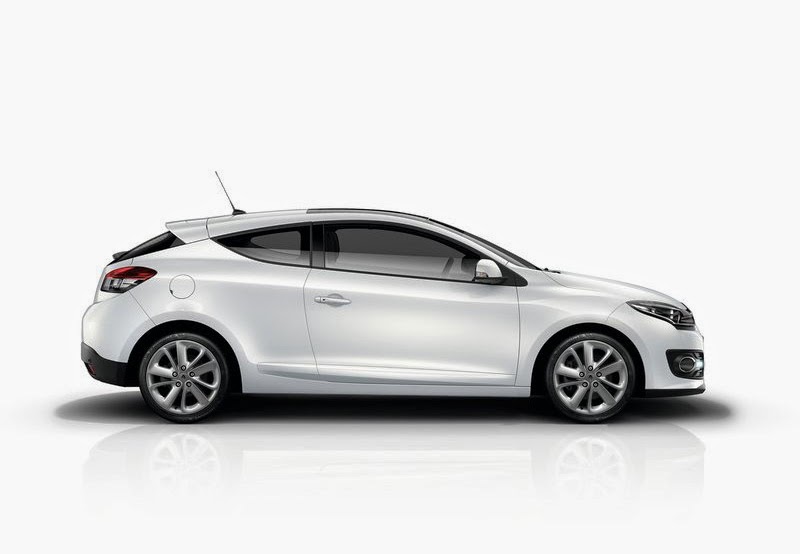
Renault Megane, 2014

Renault Megane, 2014, Luxury AutomobilessRenault Megane, 2014, Luxury Automobiless
 Renault Megane, 2014, Luxury AutomobilessRenault Megane, 2014, Luxury Automobiless
 Renault Megane, 2014, Luxury Automobiless
Renault Megane, 2014

The lines of the new-look Renault Mégane revealed shortly before the model's official presentation at the 2013 International Frankfurt Motor Show.
As Renault continues to deploy its new design identity across its model range, it is the Mégane line-up's turn to incorporate the brand's latest front-end styling.

The change ensures greater unity between the front ends of Mégane Hatchback, Mégane Estate and Mégane Coupé which feature the same bumper and bonnet, although each version maintains its own distinctive identity. They are also equipped with new elliptical headlights.

The new styling identity has been carried over to the line-up's sporty models, too. Mégane RS and Mégane GT both boast an even more dynamic stance and a new front-end design, as well as new headlights with gloss black eyelids.


Read More