Wednesday, June 4, 2014

Suzuki Grand Vitara, 2013

Suzuki Grand Vitara, 2013, Luxury AutomobilesSuzuki Grand Vitara, 2013, Luxury Automobiles
 Suzuki Grand Vitara, 2013, Luxury AutomobilesSuzuki Grand Vitara, 2013, Luxury Automobiles
 Suzuki Grand Vitara, 2013

The Suzuki announced the fresh faced Grand Vitara, equipment and aim to reinvigorate the Suzuki Grand Vitara's appeal in the competitive mid-sized SUV sector.

At the front of the car the bumper and grille have been re-styled with a more angular design and the foglamp styling has been revised. Additional changes include inner headlight black accents on 5 door SZ5 models, and new design 17" or 18" alloy wheels.

The customer demand, a temporary use 16 inch spare wheel with 225/70 tyre has now been included as standard, eliminating the need for a puncture repair system. As the spare wheel is mounted on the rear door the Suzuki Grand Vitara grows in length by 200mm (five door models) and 170mm (three door models).

Moving inside, SZ3 (3 door) and SZ4 (3 door and 5 door) models are finished with new design seat trims whilst SZ5 5 door models are now equipped with a 6.1 inch touchscreen Colour Navigation System. The navigation system is powered by Garmin and includes comprehensive European mapping with downloadable updates and content.

Under the bonnet, 1.9 DDiS models have had the emissions control system revised, resulting in a CO2 decrease from 179 g/km to 174 g/km - which means the VED band for the 1.9 DDiS engine has been reduced by one band to H. An additional benefit of this is an improvement in combined fuel economy to 42.8mpg from 41.5mpg.

The Suzuki launched the first Vitara 24 years ago, creating the world's first compact SUV and tapping into a new market for vehicles that combine true off-road capability with responsive, fun-to-drive on-road ability.
Read More

Tuesday, June 3, 2014

Subaru Outback, 2015

Subaru Outback, 2015, Luxury Automobiles Subaru Outback, 2015, Luxury Automobiles
 Subaru Outback, 2015, Luxury Automobiles Subaru Outback, 2015, Luxury Automobiles
 Subaru Outback, 2015, Luxury Automobiles Subaru Outback, 2015, Luxury Automobiles
 Subaru Outback, 2015
 
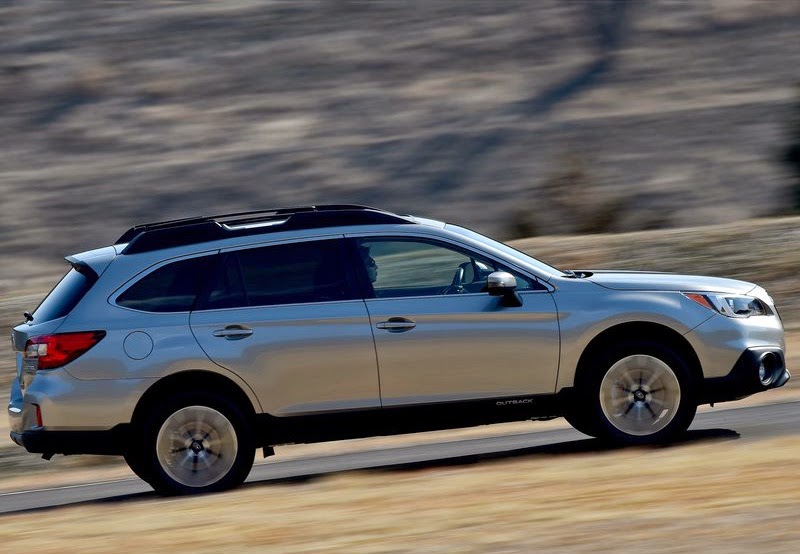
The Subaru of America, Inc. introduced the all-new 2015 Outback, the fifth generation of the World's First Sport Utility Wagon, at the 2014 New York International Auto Show in the Jacob K. Javits Center. The 2015 Outback offers the roomiest interior, most capable chassis and highest fuel-efficiency in the model's 20-year history. Its bold new design delivers an even more compelling blend of on-road agility, off-pavement control, ride comfort, interior refinement and safety technology.

The 2015 Outback arrives in Subaru dealerships in summer 2014. The 175-horsepower 4-cylinder Outback 2.5i model is available in Standard, Premium and Limited trim lines, accompanied by the top-of-line 6-cylinder 3.6R Limited with 256 horsepower. All trim lines add more standard amenities, conveniences and new infotainment systems.

The original Outback established a template for many competitive crossover models that followed, and the new-generation 2015 Outback further strengthens the melding of passenger- car and SUV attributes that crossover shoppers seek. The 2015 Outback exemplifies Subaru's mastery of outdoors-oriented vehicle engineering, not just for its standard Symmetrical All-Wheel Drive and raised ground clearance, but also for numerous details that help make it more convenient to load and carry cargo as well as items such as kayaks and bikes. Newly standard X-Mode, Hill Descent Control and Hill Start Assist augment Symmetrical All-Wheel Drive to assist the driver in navigating rough roads, slippery surfaces or steep inclines.

New for 2015, all Outback models come standard with the Lineartronic CVT (continuously variable transmission), which features paddle-shift control switches and is instrumental in the Outback's significantly improved fuel economy. Manufacturer-estimated ratings of 25 mpg city / 33 mpg highway / 28 mpg combined are up from 24/30/26 in the 2014 model. These figures place the 2015 Outback 2.5i at the top of the midsize crossover class, bettering front-wheel drive versions of some competitive crossovers.

A new Active Grille Shutter system on the 2015 Outback 2.5i helps to improve fuel economy by reducing wind resistance when closed. Electric Power-Assisted Steering and improved aerodynamics also contribute to the increased efficiency in all models. Due largely to its new Lineartronic CVT, the 6-cylinder Outback 3.6R Limited also improves fuel economy, with manufacturer-estimated ratings of 20 mpg city/27 mpg highway/22 combined vs. 17/25/20 for the previous version.

The Bold New Design Brings New Functionality
The all-new 2015 Outback introduces a bolder look with crisper, sculpted lines that convey both its all-road capability and upgraded refinement. A new front fascia combines the hexagonal grille and bumper into one smooth piece. An aluminum hood reduces weight over the front wheels, which helps enhance steering response. In the Outback 3.6R Limited, new standard HID low-beam headlights give the car a more distinctive nighttime signature. Limited trim line models feature turn signal exterior mirrors.

The 2015 Outback's windshield is more raked, pulled forward 2.0 in. at the base. The new windshield angle, higher seating hip points, new front partition windows and door-mounted side view mirrors help improve visibility. The 2015 Outback maintains a footprint similar to the model it replaces. Wheelbase is increased by just 0.2-in., overall length by 0.6-in. and width by 0.7 in. The changes, though small, yield a roomier passenger cabin, at 108.1 cu. ft. (up from 105.4 cu. ft.). The added space includes gains in shoulder, front and rear hip and elbow room and rear legroom. The Outback's cargo area has been enlarged to 35.5 cu. ft. behind the rear seats, up from 34.3, while maximum capacity with the standard 60/40 split fold-down rear seat backs folded is now 73.3 cu. ft., up from 71.3. In addition, the load floor provided by the lowered seats now lays flatter, and new rear seat back release levers in the cargo area enhance convenience.

The Outback continues with 8.7-in. ground clearance, which is higher than for some SUVs, yet with low step-in height for comfort. New step-style door sills allow one to stand firmly when securing objects to the roof rails with integrated retractable crossbars and tie downs. A power rear gate with memory height is available on Outback for the first time.

New Safety and Security Technology from a Safety Leader
The 2015 Outback builds on the stellar safety performance of the previous model, adding new front seat-cushion airbags that help to keep occupants in place in a frontal collision. All trim lines come standard with a rear-view camera, and a new rollover sensor can deploy the side curtain airbags if an imminent rollover is detected.

The 2015 Outback features new standard Welcome Lighting that automatically turns on cabin illumination and exterior lights as the driver approaches or departs the vehicle. The Limited trim offers a Key less Access & Start system with PIN Code Access.

The new Subaru Rear Vehicle Detection System, which is standard on Limited trims and available for the 2.5i Premium, offers three functions. Blind Spot Detection detects vehicles on either side of the vehicle, in the driver's blind spots; Lane Change Assist detects fast-approaching vehicles in adjacent lanes, and Rear Cross Traffic Alert detects vehicles approaching from a perpendicular direction while reversing, such as from a driveway. LED indicators on the side mirrors alert the driver. Rear Cross Traffic Alert uses an indicator in the rear view camera display.

The 2015 Outback offers the latest version of the Eye Sight driver-assist system, the highest-rated front crash prevention system by the Insurance Institute for Highway Safety (IIHS). Available for Outback Premium and Limited trim lines, Eye Sight uses Subaru-developed stereo camera technology and integrates Adaptive Cruise Control, Pre-Collision Braking and Vehicle Lane Departure Warning. The 2015 Outback is projected to achieve the IIHS Top Safety Pick+ award, as the 2014 Outback did.

Models equipped with Eye Sight also come with new Steering-Responsive Fog Lights. The feature, which works only when the fog lights are turned off, activates the left or right fog light independently, depending on vehicle speed and steering angle, to provide enhanced illumination in the direction of the turn. The fog lights are pre-aimed for maximum coverage in corners.


Read More

Monday, June 2, 2014

SsangYong XLV Concept, 2014

SsangYong XLV Concept, 2014, Luxury Automobiles
 SsangYong XLV Concept, 2014, Luxury Automobiles SsangYong XLV Concept, 2014, Luxury Automobiles
 SsangYong XLV Concept, 2014, Luxury Automobiles SsangYong XLV Concept, 2014, Luxury Automobiles
 SsangYong XLV Concept, 2014, Luxury Automobiles
 SsangYong XLV Concept, 2014, Luxury Automobiles SsangYong XLV Concept, 2014, Luxury Automobiles
 SsangYong XLV Concept, 2014

The XLV is a 'smart user interface' B-segment SUV concept featuring significantly lower CO2 emissions thanks to its hybrid system which combines a 1.6-litre diesel engine with an electric motor powered by a lithium ion battery.

XLV is the latest iteration in a series of multi-interface concepts which were first seen with the XIV-1 presented at the Frankfurt Motor Show in 2011. The XLV will become one of SsangYong's core strategic models to underpin its future growth.

290mm longer than the XIV-1 concept, XLV provides accommodation for seven passengers in an innovative 2+2+2+1 arrangement, where the seventh seat slides between the second and third rows for optimum flexibility.

Showcasing SsangYong's design philosophy of being 'Robust, Specialty and Premium', this latest concept projects a rhythmical and dynamic exterior design aimed at appealing to the smart user who seeks individuality and practicality to support their active lifestyle.
The XLV is a genuine multi-role vehicle for both urban driving and the pursuit of outdoor leisure activities.

The styling concept
The design of XLV has been inspired by the association of the power and dynamism of nature, and SsangYong's new design philosophy, 'Nature born - 3 Motion', the central theme of the brand's vehicle design language that was first articulated in the XIV concept series.

SsangYong's design philosophy embraces the dignified, dynamic and rhythmical qualities of nature, while enriching the customer experience through the harmony of man, nature and the car. At the 2014 Geneva International Motor Show, SsangYong introduces its latest design concept based on the theme of 'Rhythmical Motion'.

The design characteristics
XLV stands for eXciting smart Lifestyle Vehicle, and is a car that performs the multi-role of providing not only a means of transportation but one that also offers exciting and enjoyable driving. The XLV is inspired by the pleasure and enjoyment that nature presents, and features a rhythmical design drawing on the dynamic motion and fluidity of nature.

The Exterior
SsangYong's visual approach to XLV creates a robust and dynamic exterior design. Detailed and dynamic character lines flow rhythmically to connect the rich body volume. The front look harmonises with the grille and headlights, presenting a slim, wide image which is evident on previous XIV series concepts notably the SIV-1 and LIV-1. This look will also be seen on subsequent models, while the wider D pillars with black detailing is a design cue seen on other concept models by SsangYong.

Spacious passenger and load areas highlight the car's practicality as well as it active sports intentions. The two-tone black effect to the roof strengthens its sportiness while also helping to lower the overall height, while the A pillars with blackouts also create the impression of width and openness. The sleek and dynamic design of the car's side is complemented by a black horizontal split with a two-tone effect inspired by the body of a dolphin.

The Interior
The interior is spacious and just as dynamic as the exterior of this concept suggests. The functional beauty of the interior is realised by using simple design language which is the essence of this car. The shape of a bird's wings in flight influences the dashboard and whole front area of the car's cabin, optimising the sense of inner space and creating a relaxed and comfortable environment. Honeycombed graphics illumination on the orange red trim line is inspired by the emotion of spotting fireflies in the dark.

The 2+2+2+1 seating layout is a key feature of this car. The seventh seat moves freely along the centre of the car affording a sense of freedom and allowing communication and space between passengers in the second and third rows of seats. XLV is a genuine multi-role vehicle designed for both urban driving and the pursuit of leisure activities, and the free movement of this seat adds greatly to the car's multi-role function, while its soft-touch interior trim and fabric seat materials also support its eco-friendly credentials.
Read More

Sunday, June 1, 2014

Seat Leon ST, 2014

Seat Leon ST, 2014, Luxury Automobiles
 Seat Leon ST, 2014, Luxury Automobiles Seat Leon ST, 2014, Luxury Automobiles
 Seat Leon ST, 2014, Luxury Automobiles Seat Leon ST, 2014, Luxury Automobiles
 Seat Leon ST, 2014

The new SEAT Leon ST demonstrates that thrilling sporting character and exceptional everyday usability do not have to be mutually exclusive. The third member of the Leon family combines the young, dynamic design and the precise handling of its siblings with an amazing degree of utility. Like every Leon, the ST displays an impressive level of craftsmanship and premium materials. The luggage space of the 4,535 mm compact estate car offers excellent variability and the very best functionality down to the last detail. It has a load capacity of 587 litres, rising to as much as 1,470 litres with the rear seat backrests folded - meaning that even the big items of everyday life are best accommodated in the SEAT Leon ST.

"Nobody has to choose anymore between sporty and practical. The new Leon ST offers both," says Jürgen Stackmann, President and CEO of SEAT S.A. "With its sporty look, its surprisingly high utility and its state-of-the-art technology, the Leon ST defines a new standard in the compact estate car class - at a very fair price. Like the already highly successful Leon and Leon SC, the new ST is the perfect representative of SEAT's brand values."

The design of the SEAT Leon ST continues the emotional SEAT design language, as well as its high level of quality in materials and workmanship. The line-up of state-of-the-art engines is extremely broad, with the power spectrum of TDI and TSI drives ranging from 63 kW (86 PS) to 135 kW (184 PS).

The exceptionally efficient New 1.6 TDI Ecomotive with 81 kW (110 PS) achieves fuel consumption of just 3.2 litres per 100 km in the NEDC (New European Driving Cycle), equating to a CO2 figure of only 85 grams per km.

The new estate from SEAT handles every bit as precisely and dynamically as the Leon and Leon SC. Beyond the Reference and Style equipment lines, the high-performance FR variant underscores the leading position it holds among sporty compact estate cars.

The extensive range of hi-tech options such as the full-LED headlamps is expanded by the ACC adaptive cruise control with proximity radar and DCC adaptive chassis control with variable damper adjustment. The optional progressive steering enables a high degree of control under sporty driving conditions.

The Design - further accentuated
The much applauded design language of the Leon range has been further accentuated for the ST. Here, too, sculpted lines along the sides deliver a thrilling interplay of light and shade. The estate also features the same sharp lines and precise edges that communicate energy and vitality. The new estate adds a whole new dimension to the Leon family - the dynamic silhouette looks taut and elegant, yet the SEAT Leon ST offers comprehensive utility for work and leisure, family and sport.

The side view of the new SEAT Leon ST displays harmonious yet exciting proportions. This includes a balanced relationship between metal (2/3) and glass surface (1/3). This clear division accentuates the solidity and underscores the refined stance of the elegant estate car. The slight taper of the side window surfaces towards the rear emphasises the feeling of spaciousness, which can be further enhanced by the optional panorama glass roof. The standard roof rail accentuates the gentle tension of the roofline.

The extra 27 centimetres added to the rear end provide some indication of the generous estate luggage space available within, while the low rear windscreen and muscular shoulders emphasise the car's dynamic character. With its even more expressive design front and rear, the FR variant of the Leon ST brings whole new meaning to the term sports estate.

Space and versatility
Despite its uniquely dynamic design, the new Leon ST is surprisingly spacious and exceptionally versatile. The load capacity stands at 587 litres in the standard configuration, rising to as much as 1,470 litres with the rear seat backrests folded. Furthermore, certain equipment variants can also accommodate extra-long loads by folding forward the passenger seat backrest, giving a maximum load length of 2.5 metres. The ST also offers a host of further functional equipment details that considerably enhance its everyday usability. The rear seat backrests, for instance, are very easy to fold forward from the boot. The Boot Pack includes a double load floor, that makes loading and unloading particularly easy, and comes with more features like the bag hooks for bringing order to the boot.

The Family Pack incorporates retractable sun shades for the rear doors and folding tables on the rear of the front-seat backrests.

The Bodyshell - Systematic lightweight design
Overall, the SEAT Leon ST weighs just 45 kilograms more than the comparable five-door model. A clear consequence of a systematic lightweight design leading also to extremely good fuel consumption figures. In the base version, the Leon ST has a kerb weight of just 1,233 kilograms, making it the lightest estate car in its class. If it is to offer optimum safety and the best possible comfort, a bodyshell has to be solid. An intelligent structure guarantees that the vehicle remains light and efficient. Solid and light - SEAT set itself this challenge, and equipped the new SEAT Leon ST with a state-of-the-art body-in-white.

In order to maintain optimum value-for-money, the decision was taken to forego cost-intensive materials like magnesium and carbon fibre - instead, many places feature high-strength and ultra-high-strength steels. These hot-formed hi-tech steels alone reduce the weight by 18 kilograms, while providing even greater stiffness to the occupant cell.

The body-in-white of the five-door variant of the Leon is lighter than the preceding model by no less than 25 kilograms. And for the new Leon ST, too, systematic lightweight design was implemented across all elements of the vehicle. Thus, a great many parts in the engines, chassis and interior also make a contribution to weight reduction.
Read More

Saturday, May 31, 2014

Renault Koleos, 2014

Renault Koleos, 2014, Luxury Automobiles Renault Koleos, 2014, Luxury Automobiles
 Renault Koleos, 2014, Luxury Automobiles Renault Koleos, 2014, Luxury Automobiles
 Renault Koleos, 2014, Luxury Automobiles Renault Koleos, 2014, Luxury Automobiles
 Renault Koleos, 2014

The new Renault Koleos is attractive and easy to recognise at first glance thanks to its new front end which embodies the brand's new identity.The redesigned two-tone wheels provide the latest evolution of the model with extra character, while the chrome finish of the side protective strips adds a touch of distinguished elegance.A new, refined body colour - Ebony Brown - is now also available.The cabin, too, benefits from a new trim, plus new brown leather upholstery to harmonise with the Ebony Brown exterior finish.

The new Renault Koleos is equipped with the new in-dash Renault R-Link multimedia system complete with seven-inch touchscreen display. Renault R-Link permits the selection of one of 26 languages and packs all the expected multimedia functions, from navigation, radio and telephony to Bluetooth connectivity and audio streaming, as well as connectivity for portable music-playing devices. It also proposes services associated with the vehicle's own systems, plus access to the Renault R-Link Store which has a catalogue of more than 50 applications (depending on country) that can be downloaded directly to the vehicle or using a personal computer.

The other important new feature of the car is the Blind Spot Warning (BSW) function which provides a visual alert whenever a vehicle is detected in the blind spot in order to facilitate safe overtaking.

A reversing camera combined with rear parking sensors provides a real-time image of what is behind the car on the R-Link system's display. A hands-free card, Hill Start Assist and Hill Descent Control functions, and Bose audio round off the extensive list of high-end equipment available for New Renault Koleos.

Styling
The front end of New Renault Koleos embodies Renault's new styling identity which is founded on harmonious, elegant lines. The new bumper and chrome grille, which incorporates a large Renault logo at its centre, provide the vehicle with an assertive yet elegant look.The door mirror housings are equipped with LED indicators.New Renault Koleos' SUV lines, high-up driving position and new, original two-tone wheels further express the model's unique personality. The rear screen retains the same rake that provides Renault Koleos with its dynamic stance.To facilitate access to the boot, the split-opening tailgate opens in two parts. The materials selected for the cabin are of an outstanding quality, while the finish meets the high demands associated with the segment.

The centre console features a satin finish trim and numerous chrome highlights.Like the door panels, the centre console comes with wood inserts.New leather upholsteries have been added to the catalogue, while the 0.75-square metre opening panoramic sun roof ensures a brightly lit interior.

Technology
New Renault Koleos is packed with technology and comfort-enhancing features, as well as the brand's most innovative equipment.One of the chief differences with the former version is the in-dash, connected Renault R-Link multimedia system complete with a seven-inch touchscreen display.This highly innovative, smart and intuitive system was designed specifically for automotive use and revolutionises the world of motoring by simplifying manoeuvres and contributing to travelling comfort.
  •     R-Link is equipped with a large seven-inch (18cm) touchscreen display, steering wheel-mounted remote controls, a console-mounted joystick and a voice command function that allows drivers to use its functions without taking their eyes off the road. R-Link is also fully connected in order to provide access to a host of motoring-related services and to permit the downloading of applications from the R-Link Store.
  •     R-Link provides a user-friendly interface which covers all the car's functions and data. The home page provides easy access to the different multimedia functions, Tom Tom LIVE navigation system and the R-Link Store. Users can even customise this home page and edit a list of favourite functions.
  •     With a catalogue currently including more than 50 applications, R-Link Store provides access to a long list of mobility-related functions and community-based applications already seen on smartphones. These applications can be downloaded directly to the car or via the My Renault website.
  •     After being the first manufacturer to propose steering wheel-mounted remote control and in-car navigation, after introducing the hands-free card, after bringing high-resolution displays and GPS to a broader audience, and after pioneering with a connected navigation system (Carminat TomTom LIVE), Renault continues to innovate thanks to R-Link.

In the case of New Renault Koleos, the Renault R-Link multimedia system can be controlled using either the touchscreen display or the joystick located next to the gear lever, depending on the users' needs.

Other innovative Renault technology seen on New Koleos is the Blind Spot Warning (BSW) which provides a visual warning whenever a vehicle is detected in the blind spot to facilitate safe overtaking. Another new feature is the reversing camera with image displayed on the R-Link display to assist parking manoeuvres.

Comfort
New Renault Koleos boasts SUV-leading comfort-related equipment. The cabin stands out as an eloquent example of the brand's extensive savoir-faire. The driving position can be optimised thanks to the height-adjustable driver's seat, as well as the reach- and height-adjustable steering wheel. The automatic dual-zone climate control allows the driver and passenger to select their ideal cabin temperature independently.

The vehicle is also equipped with vents for rear occupants.New Renault Koleos comes with a variety of stowage solutions.At the front, there is a chilled 15-litre glove box, while the centre console comes with a removable stowage bin and the centre armrest incorporates cup holders. The split tailgate facilitates access to the boot. The upper part is practical when the car is parked in a cramped space or when carrying long items. The lower part can be opened to load heavy or bulky objects. When lowered, this part of the tailgate can also be employed as a solid, practical platform capable of supporting a load of up to 200kg. The 60/40-split folding rear bench seat incorporates the Easy Estate system which allows the seat to be fully folded from the boot in one simple movement.

New Renault Koleos comes with a card for hands-free starting and entry, as well as an electronic parking brake, automatic headlight and windscreen wiper activation and cruise control with speed limiter. Meanwhile, the Hill Start Assist function is automatically triggered to prevent the vehicle from rolling backwards when starting on a gradient of more than 10 percent.For even greater travelling enjoyment, occupants can benefit from the Bose Energy Efficient Series audio system. Tailor-engineered for Koleos' cabin, it delivers a unique listening experience similar to that of a live performance thanks to an arrangement of seven loudspeakers, a woofer and a digital amplifier.

Safety
In terms of active safety, and to help prevent accidents from happening in the first place, New Renault Koleos is equipped with ABS, electronic brake force distribution, emergency brake assist, ESC and understeer control. Even before the latter is triggered, the all-wheel drive management system is programmed to take corrective action by adjusting the front/rear torque split should over- or under-steer be detected.

On the passive safety front, the vehicle's structure incorporates programmed front and rear crumple zones, while the cabin is engineered to serve as a protective cell in an accident.New Renault Koleos is equipped with a wide range of occupant protection equipment, including six airbags, load limiter seat belts for the front and outer rear seats, pretensioners for the front seat belts and Isofix child seat anchorage for the outer rear seats. In a rear impact, the head rests and seats of Renault Koleos have been designed to ensure a very high level of occupant protection.


Read More

Qoros 3 Cross Hybrid Concept, 2013

Qoros 3 Cross Hybrid Concept, 2013, Luxury Automobiles
 Qoros 3 Cross Hybrid Concept, 2013, Luxury Automobiles Qoros 3 Cross Hybrid Concept, 2013, Luxury Automobiles
 Qoros 3 Cross Hybrid Concept, 2013

The concept illustrates how the design themes introduced in the Qoros 3 Sedan may be applied to its future model range. It also offers a glimpse ahead to the brand's future technological developments with a pioneering hybrid drive that not only enhances efficiency but that also provides an exceptional all-wheel driving experience.

The Qoros modular vehicle architecture is a key factor in ensuring that new models can be introduced quickly and efficiently, and the Qoros 3 Cross Hybrid Concept is based on the same vehicle platform as the Qoros 3 Sedan.

Hallmark design features reinterpreted
The Qoros 3 Cross Hybrid Concept showcases a mild evolution of the styling introduced on the production sedan. Elegant lines and balanced proportions reflect sporty aspirations. Short body overhangs and the coupé-like roof line flowing into the hatchback tailgate give the five-door model a touch of dynamic flair. Horizontally oriented lines highlight the width of the boldly shaped rear, which featuresa large tailgate.

The front view of the concept is almost identical to the Qoros 3 Sedan, but the core elements of the Qoros 'face' are supplemented with bespoke accents. The lower air inlet at the bottom of the trapezoidal grille stretches further back, highlighting the concept's powerful front stature. Also distinctive are the rounded contours of the fog lamps, which are placed wide apart.

The headlamp clusters, featuring LED bars at their top edge as daytime running lights, are the same as those on the Qoros 3 Sedan, stretching far into the flanks and into a striking contour edge which runs through the door handles and rises continuously to the rear. The rear light clusters - unique to this concept, feature horizontal LED light bars in a neat compact arrangement.

Its raised ground clearance and specific design features that emphasise its robust, versatile characteristics hint at the Qoros 3 Cross Hybrid Concept's potential for excursions beyond the asphalt. It features underbody protection at the front and rear to protect against impacts, as well as uprated suspension and damper systems that ensure occupants remain comfortable even on rough terrain.

A combination of hybrid drive and all-wheel system for increased driving pleasure and efficiency
The development of advanced engineering innovations is a core strategic activity for the brand and the Qoros 3 Cross Hybrid Concept features an advanced hybrid drive system developed in partnership with leading electric drive systems specialist American Axle.

A three-cylinder 1.2-litre turbocharged petrol engine with 97 kW (130 bhp) is installed transversely at the front to drive the front wheels.

A 50 kW electric motor is housed between the luggage compartment floor and the rear axle, not only convenient for power transfer but also safely isolated from rear collision impacts. The motor is powered by a LG Chem lithium-ion battery with a maximum capacity of 1.9 kilowatt-hours.

A second electric motor - the Integrated Starter Generator (ISG)-is mounted between the petrol engine and the transmission. Its role, as well as to start the petrol engine more discreetly - with less noise and less vibration - than a traditional starter motor, is to charge the rear electric motor's dedicated battery so that the Qoros 3 Cross Hybrid Concept can operate continuously in all-wheel drive mode. And, during the most demanding driving, the ISG delivers additional power to the front axle, allowing the concept to deliver surprisingly swift performance: zero to 100 km/h is achieved in less than 7.0 seconds (provisional target, not yet verified).

Intelligent control software ensures seamless transition between petrol-engine front-wheel drive, electric motor rear-wheel drive, and all-wheel drive, depending on the most efficient mode to respond to the driver's inputs and the prevailing road conditions.

The Qoros 3 Cross Hybrid Concept can be driven in pure-electric mode at a speed of up to 120 km/h, and for a maximum range of approximately four kilometres (provisional target, not yet verified).


Read More

Friday, May 30, 2014

Porsche 911 Turbo Cabriolet, 2014

Porsche 911 Turbo Cabriolet, 2014, Luxury Automobiles Porsche 911 Turbo Cabriolet, 2014, Luxury Automobiles
 Porsche 911 Turbo Cabriolet, 2014, Luxury Automobiles Porsche 911 Turbo Cabriolet, 2014, Luxury Automobiles
 Porsche 911 Turbo Cabriolet, 2014

The dynamic range of the new 911 Turbo models multiplied by the driving pleasure offered by an open-top sports car: This is the succinct formula behind the two new leading 911 Cabriolet models. Some 50 years after the 911 first made its début and to coincide with the 40th anniversary of the 911 Turbo, the open-top versions of the 911 Turbo and 911 Turbo S are making their global début. The vehicles will be unveiled for the very first time at the 2013 Los Angeles Auto Show . By adding the two new leading 911 models into the mix, Porsche is doubling its offering of the top-of-the-range models to four versions.

In supplementing the range, the Porsche 911 Turbo Cabriolet and 911 Turbo S Cabriolet deliver the same blend of dynamism, performance and efficiency offered by the Coupé model unveiled a few months ago. Expressed in figures: The turbocharged 3.8-litre six-cylinder engine delivers 520 bhp (383 kW) in the open-top 911 Turbo and 560 bhp (412 kW) in the S model. The cars accelerate from zero to 100 km/h in 3.5 and 3.2 seconds respectively, reaching a top speed of up to 318 km/h. And all this while achieving fuel consumption figures below the ten-litre limit: Both of the new top-of-the-range Cabriolet models rest assured in the New European Driving Cycle (NEDC), boasting figures of 9.9 l/100 km (equivalent to 231 g/km CO2). When compared against the respective predecessor models, the new vehicles deliver 30 bhp more power and are 0.2 seconds faster in terms of their standard acceleration. They are also up to 15% more efficient.

Active rear-axle steering and active aerodynamics for even greater dynamism on the road
The driving dynamics offered by the two new top-of-the-range Cabriolet models is something that cannot be expressed in simple figures. Boasting PDK dual-clutch transmission as standard and the new PTM all-wheel drive, as well as featuring rear-axle steering and active aerodynamics, the open-top 911 Turbo models are now also establishing the leading Porsche technology in the open-top super sportscar segment. While the rear-axle steering has an immensely positive impact on handling for the two new super sportscars, both on the racetrack and during everyday use, the active aerodynamics can be tuned to offer optimum efficiency or driving dynamics at the touch of a button, depending on the driver's wishes.

More than ever before, both of these new top-of-the-range models also make a clear visual statement about their performance. The characteristic, widely flared rear wings of the new 911 Turbo generation are 28 mm wider than those of the 911 Carrera 4 models - a virtually level surface of just over a hand's width extends out from the C-pillar to the outer edge of the vehicle. The impressive effect of this width is accentuated still further when the top is down.

Other eye-catching feature of the 911 Turbo Cabriolet is the exclusive Porsche panel bow top with its lightweight magnesium frame. This innovative technology enables the Coupé-like arch to the roof to be achieved when the top is closed. This arch, which also offers advantages in terms of aerodynamics, is not feasible using conventional construction techniques. As with predecessor models, the roof opens and closes in around 13 seconds, at speeds of up to 50 km/h.

Premium furnishings in the interior
The interior of the new Cabriolet models follows that of the 911 Turbo Coupé. The S-model boasts a particularly extensive range of furnishings, with features including an exclusive interior in Black/Carrera Red and adaptive Sport Seat Plus seats with 18-way adjustment and memory. In addition, the backrest shells of the seats are leather trimmed with double cap seams, and various elements are achieved in a carbon look. As with the predecessor models, the Bose sound system is fitted as standard - and, for the first time, a Burmester system is also available on request. What's more, the radar-controlled adaptive Cruise Control system, camera-based road sign and speed limit recognition function and reversing camera are also available as options.
Read More

Peugeot 308, 2014

Peugeot 308, 2014, Luxury Automobiles Peugeot 308, 2014, Luxury Automobiles
 Peugeot 308, 2014, Luxury Automobiles Peugeot 308, 2014, Luxury Automobiles
 Peugeot 308, 2014, Luxury Automobiles Peugeot 308, 2014, Luxury Automobiles
 Peugeot 308, 2014

The Peugeot designers and engineers have created a hatchback that is audacious, intuitive and modern, to a refined and classy design. Due to the new EMP2 modular platform, the new Peugeot 308 has compact dimensions and reduced weight (-140kg). Its driving experience is top-class and its CO2 emissions create a new benchmark (with a version at less than 85 g/km). A refined interior and innovative instruments and controls (the Peugeot i-cockpit) promise a great driving experience. Its high level of quality, the result of a very ambitious initial design brief, positions the vehicle among the best, embodying Peugeot's move up-market.

With its compact length of 4.25 metres and well-balanced proportions, the New Peugeot 308 projects a classy and sophisticated presence. The front is dominated by an evolutionary reinterpretation of the brand's 'floating' front grille, and by the strong lighting signature. Slim full-LED headlamps are standard on the majority of trim levels and a world-first in the segment. The high quality of design continues at the rear, with the three Peugeot (lion) 'claws' drawn by the rear LED lamps.

A refined and high-technology interior
The Peugeot's design and engineering teams have developed the interior of the New 308 around the concept of the i-cockpit. Everything is arranged for an experience that is intuitive, relaxing the driver to focus entirely on the road ahead. The compact steering wheel and head-up instrument layout mean that information can be clearly read easily and safely, looking over rather than through the wheel.

The highlight of the New 308's generously spaced cabin is the 9.7-inch touch-screen interface, which removes much of the need for physical buttons and switches. Setting a new size standard for the class, it brings together many of the infotainment controls in one place, for ease of use and to create a contemporary and uncluttered cabin.

Advanced new modular platform for an outstanding driving experience
The driving experience of the New Peugeot 308 draws on the brand's expertise in suspension and steering, and takes them to a new high due to the benefits of the new EMP2 platform.

Development of this new PSA Group architecture has resulted in 116 patent applications and contributes towards the vehicle's excellent dynamic qualities. It also plays a key role in the car's considerable weight reduction, by an average of 140kg compared to the current generation Peugeot 308.

Breakthrough engineering has allowed many of the vehicle's major units to be reduced in size - also cutting overall weight - leading to significant reductions in CO2 emissions. As a result, this new Peugeot 308 establishes an environmental benchmark, with one model offering CO2 emissions as low as 85g/km.

Read More